
Last updated November 2, 2026
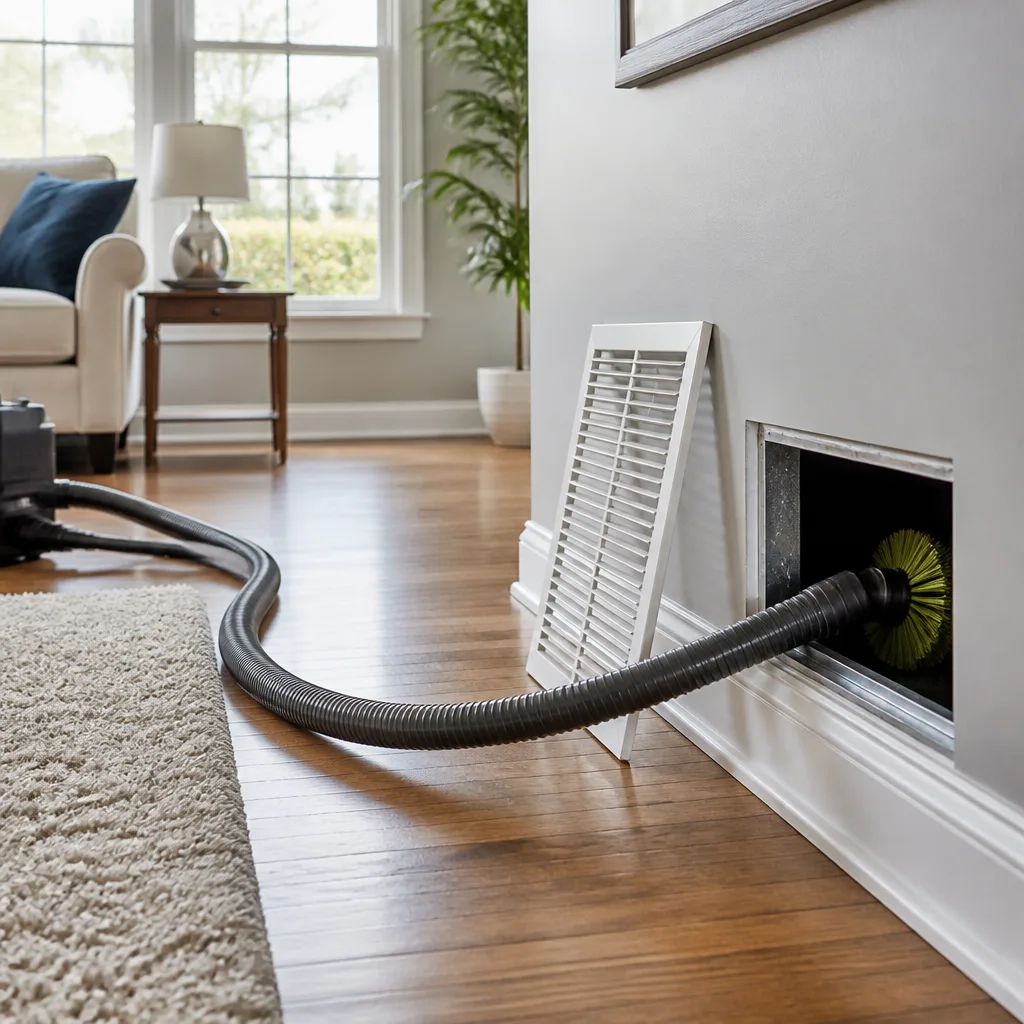 Whole-home duct cleaning
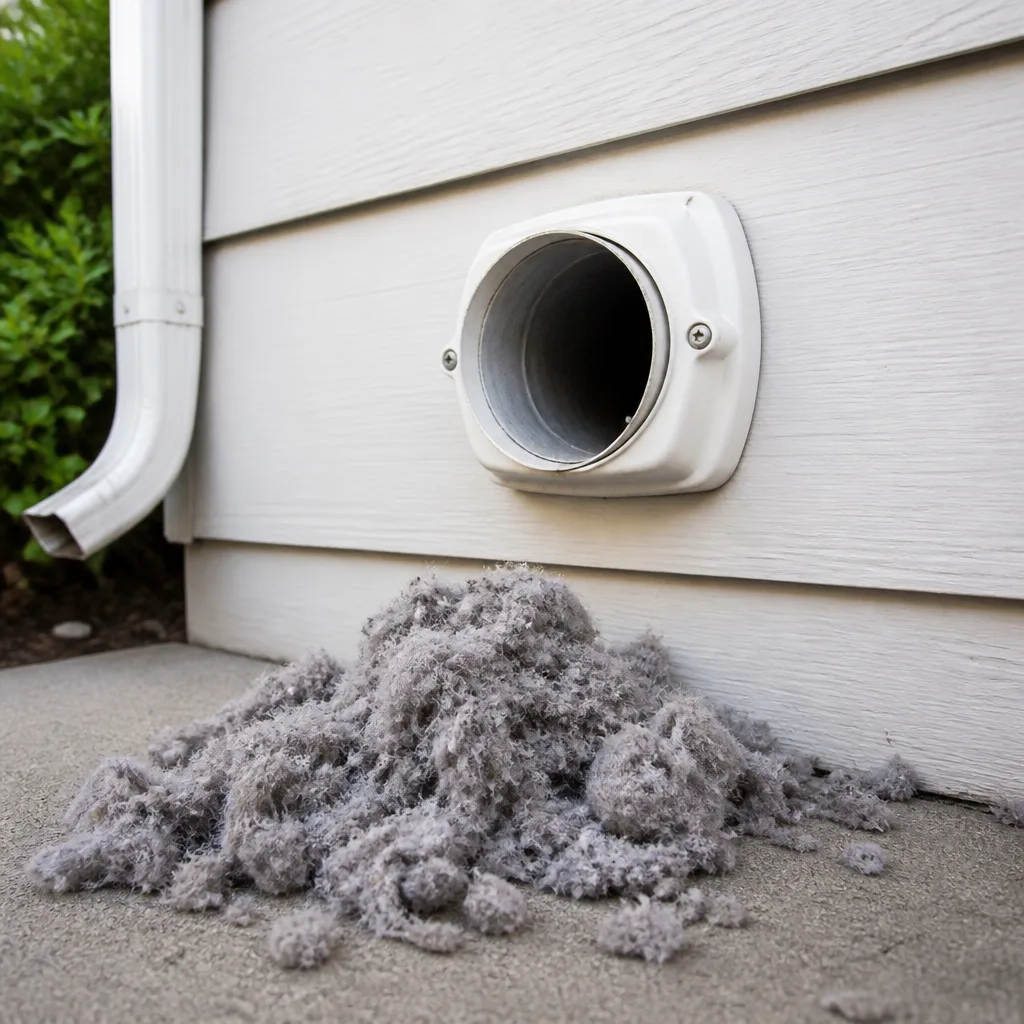 Dryer vent cleaning
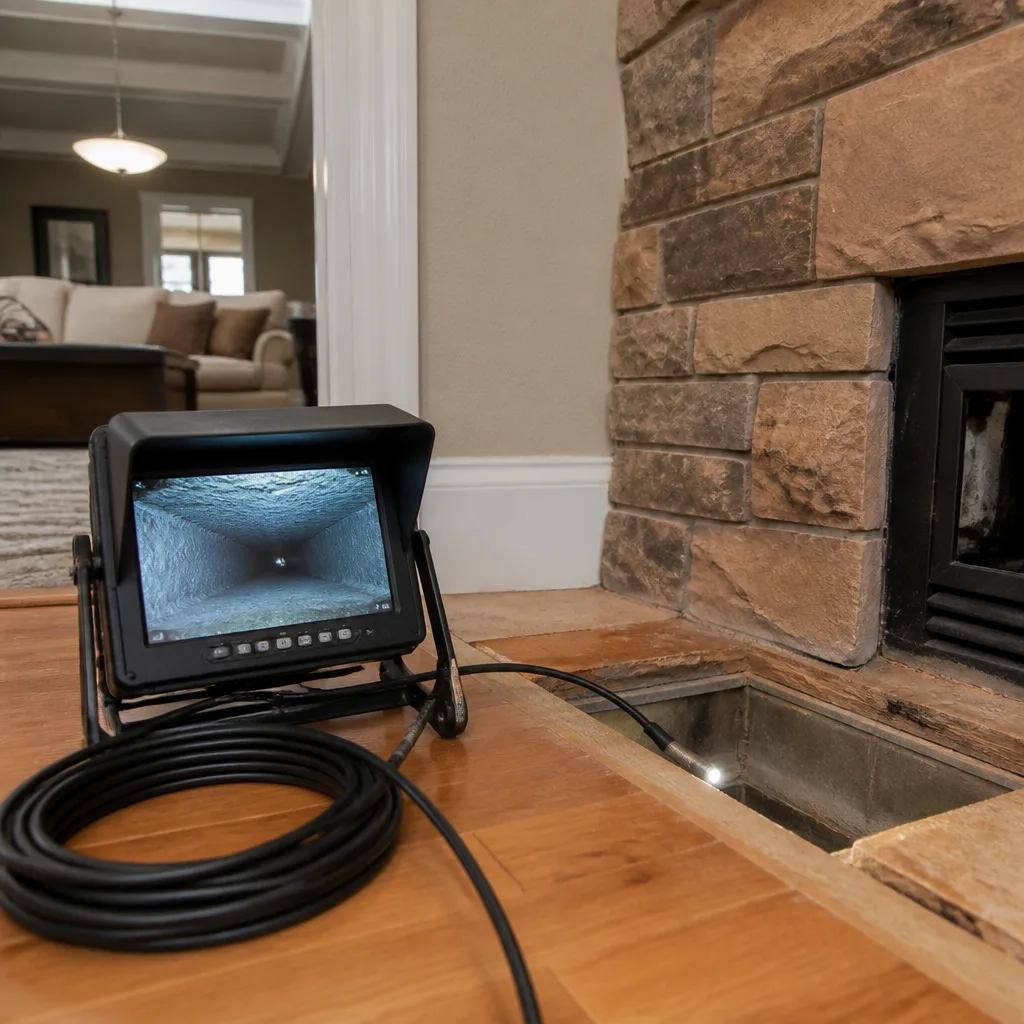 Camera inspection
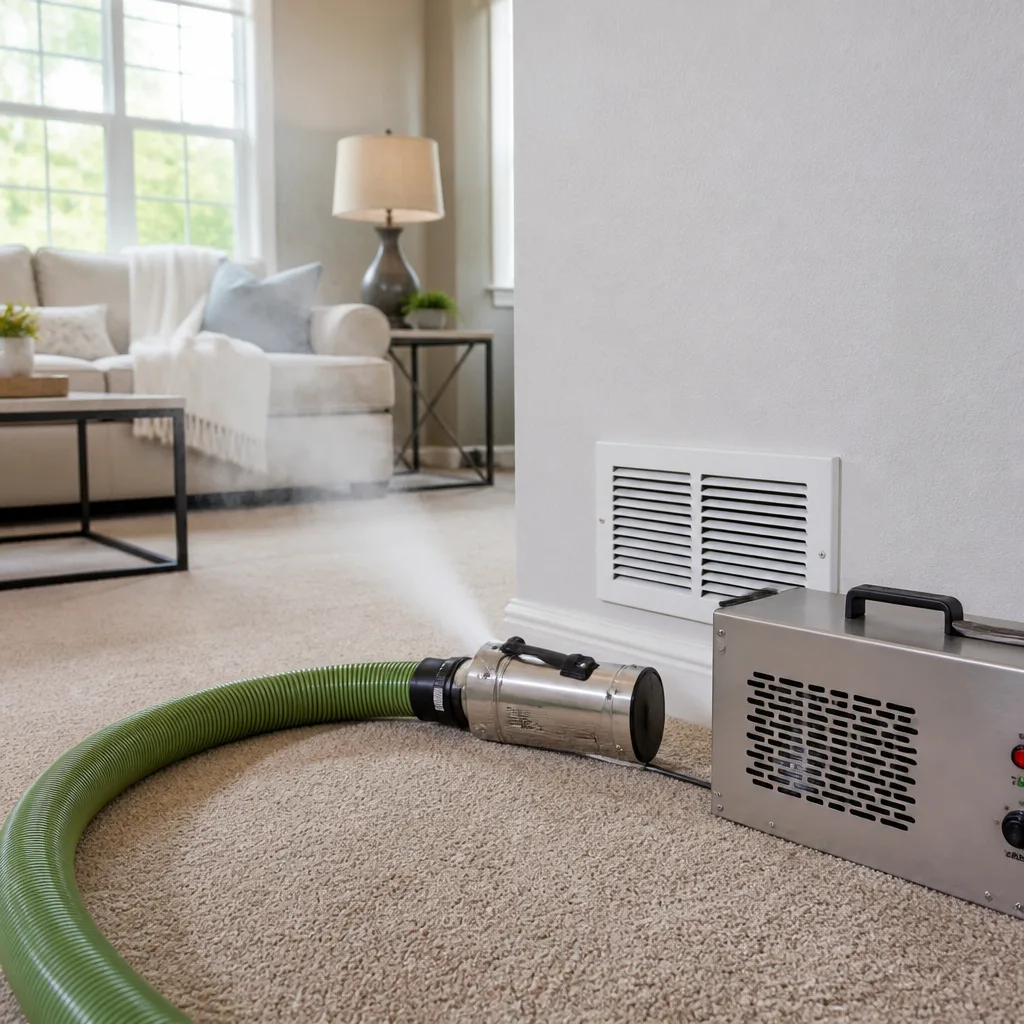 Sanitizing & deodorizing
Whole-system duct and dryer vent check with before-and-after photos - you see exactly what came out of your vents
That "$99 whole-house special" is a bait ad - the real number appears once they are in your hallway, or the "clean" is a shop-vac at the register. We photograph the inside of your ducts before and after instead.
Air Duct Cleaning Permits, Codes & Inspections in CA: What You Need to Know
Here’s a scenario we’ve seen played out in Carmel Valley more times than we can count: a homeowner calls a duct cleaning company, the technician finds a crushed flex duct run in the attic, and offers to “patch it up real quick” as part of the job. No permit, no disclosure, no inspection. Two years later, the house goes up for sale, the buyer’s inspector flags the unpermitted modification, and suddenly the seller is negotiating a $4,000 credit or scrambling to retroactively pull permits. The cleaning itself never needed a permit. The five-minute “fix” did. Our Air Duct Cleaning Warning Signs: A Carmel Valley Homeowner’s Reference Guide draws that line precisely, so you know where California mechanical code applies, where it doesn’t, and what documentation protects you either way.
Quick Answer
Air Duct Cleaning services do not require a permit anywhere in California, including Carmel Valley and Monterey County. However, the moment work crosses into duct repair, modification, replacement, or rerouting – even a small section of flex duct patched on the spot – California Mechanical Code Section 504 and Title 24 energy standards may require a mechanical permit, a licensed C-20 contractor, and in some cases a HERS duct leakage test before the system is legal. Dryer vent cleaning follows the same pattern: cleaning is permit-free, but rerouting or replacing the vent run often triggers a permit with your local AHJ.
Styles & brands we work with
- Whole-home duct cleaning
- Dryer vent cleaning
- Camera inspection
- Sanitizing & deodorizing
Table of Contents
- Cleaning vs. Repair: Where the Permit Line Actually Sits
- Title 24 and Duct Leakage: When a HERS Rater Enters the Picture
- C-20 Contractor Licensing: When a Handyman Is Legal – and When They’re Not
- Dryer Vent Work: The Overlooked Permit Trigger
- Monterey County and Carmel Valley Amendments: What Local AHJs Enforce
- Documentation to Keep After Any Duct Work (Even Cleaning)
- The Inspection Process, Step by Step
- Common Mistakes to Avoid
Cleaning vs. Repair: Where the Permit Line Actually Sits
The legal distinction is straightforward on paper. California Mechanical Code Section 504 governs what counts as “mechanical work” requiring a permit. Cleaning the interior surfaces of existing ductwork – brushing, vacuuming, agitating, negative-pressure extraction with systems like Rotobrush or Nikro equipment – modifies nothing. It’s a maintenance activity, like changing an air filter or hosing down a condenser coil. No permit. No inspection. No license threshold beyond basic business registration.
The line gets crossed when any of these happen:
- Cutting into ductwork to install an access panel for cleaning equipment
- Replacing a section of damaged flex duct, even a three-foot run in the attic
- Resealing or reconnecting joints that have separated, when the repair involves mechanical fasteners or mastic application as a structural fix
- Modifying the duct layout – adding a takeoff, rerouting a run, resizing a branch
- Replacing a plenum, transition, or connector at the air handler
Here’s where it gets uncomfortable for homeowners in Carmel Valley specifically. Many homes in the area were built between the late 1970s and early 2000s. The original flex duct in those attics is now 25 to 45 years old. The outer vapor barrier cracks, the inner liner delaminates, and sections crush under the weight of storage boxes or roof work. A technician who offers to “swap out that bad section” during a cleaning visit is now performing mechanical repair, not maintenance. And if that repair is done without a permit, the property owner inherits the liability – even if the technician was the one holding the tools.
The practical takeaway: cleaning is permit-free; anything that alters, replaces, or reconnects ductwork is not. If a contractor tells you otherwise, ask them to point to the specific California Mechanical Code exemption they’re relying on. Most can’t, because it doesn’t exist.
At Maple Air Duct home, we treat this boundary as a core part of our process. When we encounter damaged ductwork during a cleaning in Carmel Valley, we document it, photograph it, and give you a written recommendation – we don’t quietly patch it and move on. Because we offer Air Duct Repair in Carmel Valley as a core service, we’re equipped to do the repair properly, with permits pulled when the scope calls for it, rather than leaving you with a liability you didn’t know you were buying.
Title 24 and Duct Leakage: When a HERS Rater Enters the Picture
Here’s the part almost nobody explains until it’s too late. California’s Title 24 Building Energy Efficiency Standards don’t just govern new construction – they govern alterations to existing systems. When ductwork is repaired, resealed, or replaced in a California home, Title 24 Section 150.0 may require a duct leakage test to verify the system meets the state’s energy performance baseline. That test is typically performed by a certified HERS rater (Home Energy Rating System), not by the HVAC contractor doing the work.
What does this mean for a Carmel Valley homeowner?
- If you have a crushed section of flex duct replaced, the local building department may require a HERS duct leakage test as a condition of final inspection.
- That test measures how much conditioned air is escaping from the duct system. California’s threshold for altered systems is generally 15% leakage or less, measured against the system’s airflow – though Monterey County’s AHJ may apply more stringent local amendments.
- If the system fails the test, more sealing work is required, followed by a retest. The HERS rater’s report gets filed with the building department and becomes part of the permit record.
- HERS raters charge separately from the HVAC contractor. In the Monterey County market, a duct leakage test typically costs $250 to $500 depending on system size and accessibility.
- Duct cleaning that involves only cleaning – no modification, no repair, no replacement – can legally be performed by a company that does not hold a C-20 license. Many reputable duct cleaning specialists operate under general business licenses and carry specialized certifications instead.
- Duct repair, modification, or replacement – including installing new flex duct, resealing major joints, modifying plenums, or adding takeoffs – legally requires a C-20 contractor in California.
- Any work exceeding $500 in labor and materials on a single project requires a licensed contractor regardless of the work type, per CSLB rules. So even a “handyman” duct repair on the larger side of the scale crosses into licensed-contractor territory.
- Replacing a damaged section of dryer vent pipe – permitted work in most California jurisdictions
- Rerouting a vent run to correct an improper installation – permitted work
- Changing the termination point (moving the vent exit from the side wall to the roof, for example) – permitted work, and often subject to additional roofing inspection requirements
- Replacing the vent cap or hood only – generally considered a minor component replacement, though Monterey County’s AHJ may take a stricter view if the replacement changes the termination diameter or backdraft characteristics
- Duct insulation requirements. Coastal California climate zones (Carmel Valley sits in Title 24 Climate Zone 4, despite being geographically close to the coast) mean local enforcement may scrutinize replacement duct R-values more closely than inland jurisdictions do.
- Flex duct length limitations. The California Mechanical Code limits flexible duct runs – commonly to 14 feet or less, though that number varies by application. Local AHJs may enforce this strictly during inspection.
- Accessibility of duct systems. Monterey County inspectors we’ve worked with over the years tend to look hard at whether duct runs in attics are properly supported and accessible for inspection – which means the “stuff it behind the storage boxes” approach doesn’t pass.
- Invoice or work order showing the date, scope of work, and the technician’s name (not just the company name)
- Before and after photos of the duct interior and any problem areas identified. We provide these as standard practice on our cleaning jobs in Carmel Valley, because we know they’re worth more than any verbal summary if questions arise later.
- Permit documentation for any repair or modification work, including the permit number, the inspection record, and the HERS test report if one was required
- Equipment and material details – what type of duct was installed, what R-value, what mastic or fasteners were used. This matters if the next inspector asks “what did they actually put in?”
- Any written recommendations the technician provided about conditions found during the work, even if you chose not to act on them at the time
- Scope determination. The contractor assesses the work and determines whether it crosses the permit threshold. This is where experience matters; the line between “maintenance” and “alteration” isn’t always obvious to a homeowner.
- Permit application. The contractor or homeowner files a permit application with Monterey County Building Services. Applications include a description of the work, materials to be used, and the property address. Fees vary by valuation.
- Work completion. The duct work is performed to the standard specified in the application. The permit is posted at the job site during the work.
- Inspection scheduling. The contractor calls in the inspection. Monterey County inspectors typically schedule mechanical inspections within a few business days, though timing varies by season.
- Inspection day. The inspector verifies the work matches the permit application, checks for code compliance on support, sealing, insulation, and connections, and may reference any required HERS test results.
- Final sign-off. If the inspection passes, the permit is finalized and recorded. This is the paperwork you’ll want for your disclosure file.
- Letting a cleaning technician “fix” damaged ductwork on the spot without a permit. That off-the-books repair becomes your legal liability the moment the technician drives away. Get it documented and permitted if needed.
- Assuming all duct cleaning companies can legally perform repairs. Cleaning and C-20 repair work are different legal categories. Ask for license verification before any repair work begins.
- Skipping the permit because “it’s just a small section.” The California Mechanical Code doesn’t have a “small section exemption.” If it’s an alteration, the permit requirement applies regardless of size.
- Not keeping documentation from a routine cleaning. Five years from now, that invoice and those photos may be the difference between a smooth sale and a disclosure dispute.
- Ignoring a technician’s finding that your dryer vent run is too long or improperly configured. That’s not upselling – the California Mechanical Code limits vent lengths for fire safety reasons. Address it.
- Assuming a HERS test isn’t required for duct repair. In many California jurisdictions, Title 24 compliance for duct alterations includes a leakage test. Budget for it if your repair scope triggers the requirement.
- Hiring based on price alone for duct repair work. The low bid often reflects a technician who doesn’t understand what local inspectors require – and they’re not the ones who’ll be standing in front of the inspector on inspection day.
The connection to cleaning is indirect but real. Suppose a cleaning technician accidentally dislodges a connection while running a Rotobrush agitation system through an older duct run. The system might now leak more air than it did before the cleaning, even though no “repair” was performed. If the homeowner later has the system tested for a sale or energy audit, they might discover the leakage increase with no clear explanation. This is one reason we run a post-cleaning visual inspection of accessible ductwork on every job in Carmel Valley – because we know what a dislodged joint looks like, and we know what it costs to fix one properly. For additional help, see our Air Duct Cleaning Troubleshooting: Common Problems and How to Fix Them.
C-20 Contractor Licensing: When a Handyman Is Legal – and When They’re Not
California’s Contractors State License Board (CSLB) issues the C-20 Warm-Air Heating, Ventilating and Air-Conditioning Contractor license. Here’s the rule in plain language:
How do you verify a C-20 license? The CSLB website has a license check tool that takes about 90 seconds to use. You’ll need the contractor’s name or license number. The system shows license status, classification, issue date, expiration date, and any disciplinary actions or complaints on file. In our experience, most Carmel Valley homeowners never think to run this check until something goes wrong – by which point the unlicensed operator has often disappeared.
One more nuance worth knowing: a general building contractor (B license) may legally pull a mechanical permit and subcontract the duct work to a C-20 holder. That’s a common structure on larger remodel projects. What they cannot do is perform the C-20-scope work themselves unless they also hold the C-20 classification.
We carry the equipment and training to work on Honeywell and Aprilaire whole-home air quality systems, which matters here: these premium filtration setups often have integrated ductwork configurations that are more complex than a standard flex-run system. A technician who doesn’t understand how those components interact can do more harm than good during a “simple” cleaning.
Dryer Vent Work: The Overlooked Permit Trigger
Dryer vents are arguably the most confused category in residential duct work. The cleaning itself – running a rotary brush and HEPA-filtered vacuum through the vent run to remove lint accumulation – is a maintenance activity. No permit. No inspection. The National Fire Protection Association identifies dryer vent fires as one of the leading causes of residential structure fires in the United States, which is why we treat Dryer Vent Cleaning in Carmel Valley as a first-class safety service, not an add-on.
But here’s what trips people up. The California Mechanical Code Section 504.2 specifically lists “venting systems” as mechanical work that may require a permit when altered. So:
The physical reality makes this more than an academic distinction in Carmel Valley. Many local homes have dryer vent runs that travel 15 to 25 feet from the laundry room to an exterior wall, with multiple elbows along the way. Building code limits effective vent length and counts each elbow as additional equivalent feet. A vent run that was legal when the home was built might now be non-compliant because the home’s exterior was stuccoed over, the vent was modified, or a remodel changed the laundry room layout. If you’re having the vent cleaned and the technician tells you the run is too long or improperly configured, that’s a repair conversation – and it may need a permit.
Monterey County and Carmel Valley Amendments: What Local AHJs Enforce
California adopts the California Mechanical Code statewide, but local jurisdictions – Monterey County included – can and do add amendments. What does that mean for a Carmel Valley homeowner?
First, the AHJ (Authority Having Jurisdiction) for most residential work in Carmel Valley is Monterey County’s Building Services division. They review permit applications, issue permits, and conduct inspections. They also enforce local amendments to the California Mechanical Code.
Local amendments that matter for duct work tend to cluster around three areas:
The practical implication: if you’re in Carmel Valley and having duct repair work done, don’t assume that because something passed inspection in Sacramento or Fresno, it will pass here. Local enforcement varies, and Monterey County has a reputation for thorough mechanical inspections compared to some other California counties.
This is also where our local presence matters. We work in Carmel Valley attics every week. We know what the local inspectors look for, we know how the county permit office operates, and we know the difference between a repair that’s genuinely permit-exempt and one that local inspectors will flag. That kind of knowledge only comes from working the same jurisdiction repeatedly.
Documentation to Keep After Any Duct Work (Even Cleaning)
Here’s a quiet truth about California real estate transactions: the standard disclosure forms (TDS, SPQ, and related documents) ask pointed questions about repairs, modifications, and known defects in the home’s systems. Duct work is not exempt from these questions.
What should you keep after any duct work – even a routine cleaning?
The disclosure question is where documentation becomes gold. If you sell a home in Carmel Valley and disclose “duct cleaning performed 2023, no repairs needed,” you’re in a much stronger position than someone who discloses nothing and later faces a buyer’s demand letter for undisclosed HVAC issues. Conversely, if a prior owner did unpermitted duct repair that you discover during a cleaning, having documentation of what you found and what you did about it protects you going forward.
The Inspection Process, Step by Step
Let’s say you do end up needing permitted duct work in Carmel Valley – a section of flex duct replaced, a plenum resealed, a dryer vent rerouted. What does the process actually look like from start to finish?
The entire process for a typical duct repair case in Carmel Valley usually takes one to three weeks from permit application to final inspection, depending on county workload and the complexity of the work. If a HERS test is required, that adds time for scheduling the rater and receiving the report.
Common Mistakes to Avoid
When to Call a Professional
If you’ve found damaged ductwork – crushed flex runs in the attic, separated joints, visible mold growth on duct surfaces, or a dryer vent that’s taken a hit from roof work – you need someone who can diagnose the full scope, not just vacuum and leave. We find the problem, then we fix it. Our team runs professional-grade Rotobrush and Nikro duct cleaning systems – the same equipment trusted by remediation and restoration contractors – and we carry Abatement Technologies air filtration gear for elevated air-quality scenarios. We also work on Honeywell and Aprilaire systems, so we know premium whole-home filtration setups from the inside. Maple Air Duct offers free estimates in Carmel Valley. Call (855) 338-0352 and we’ll give you an honest scope assessment, including whether your situation requires a permit – before any work begins, not after.
See the difference
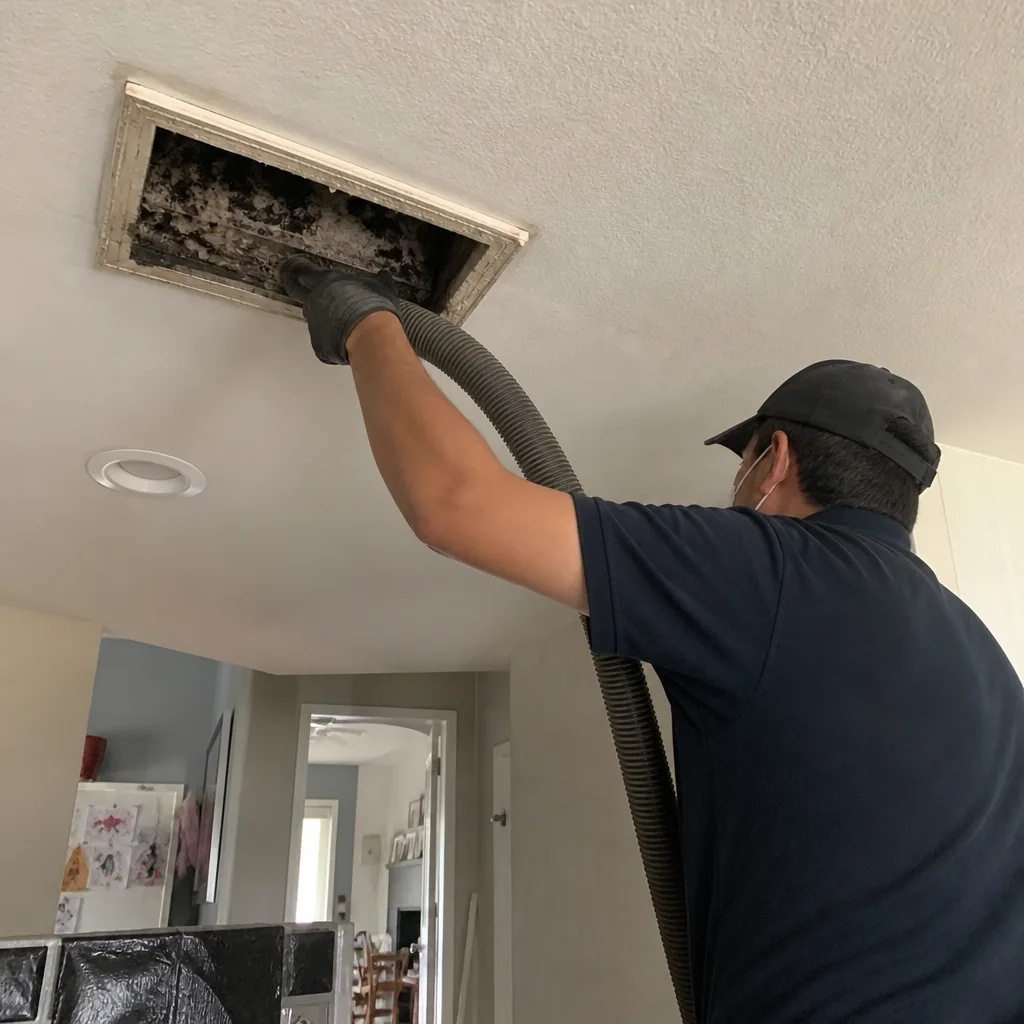 Before
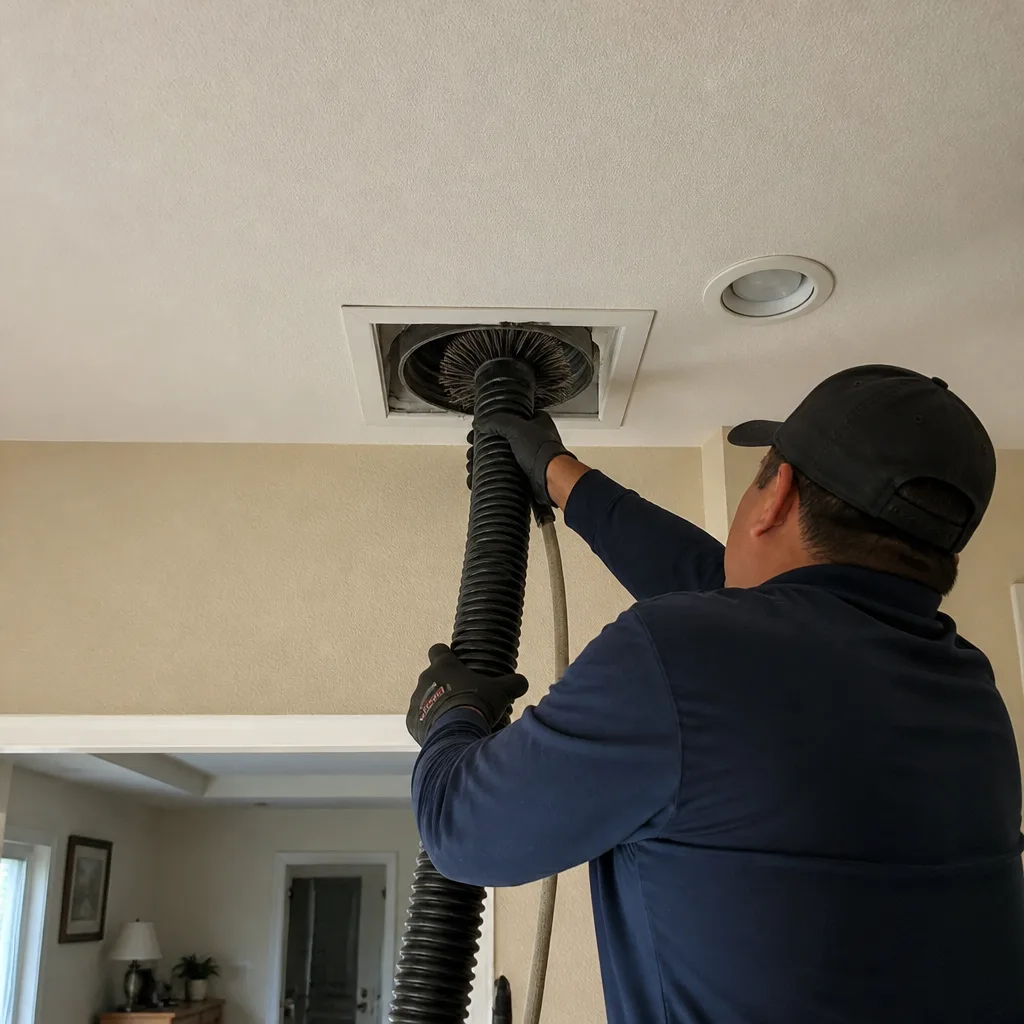 After
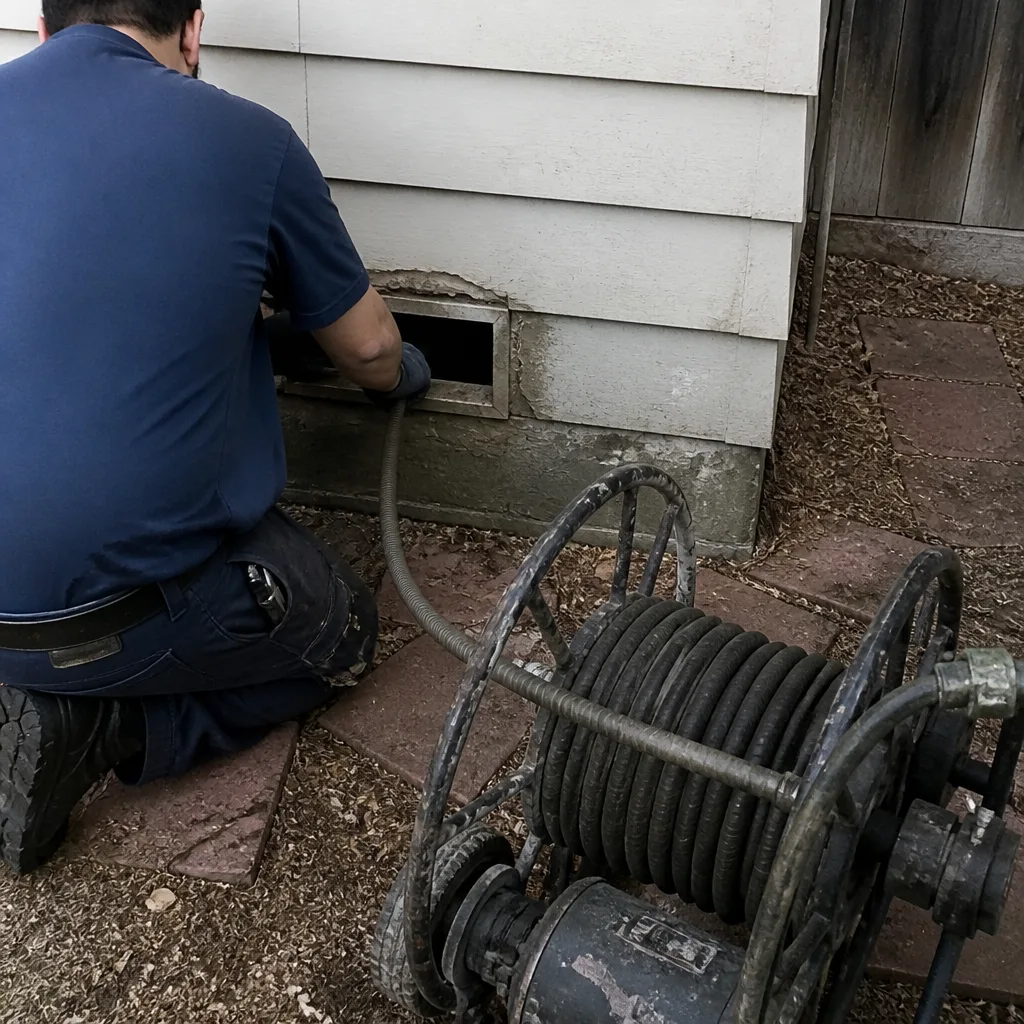 Before
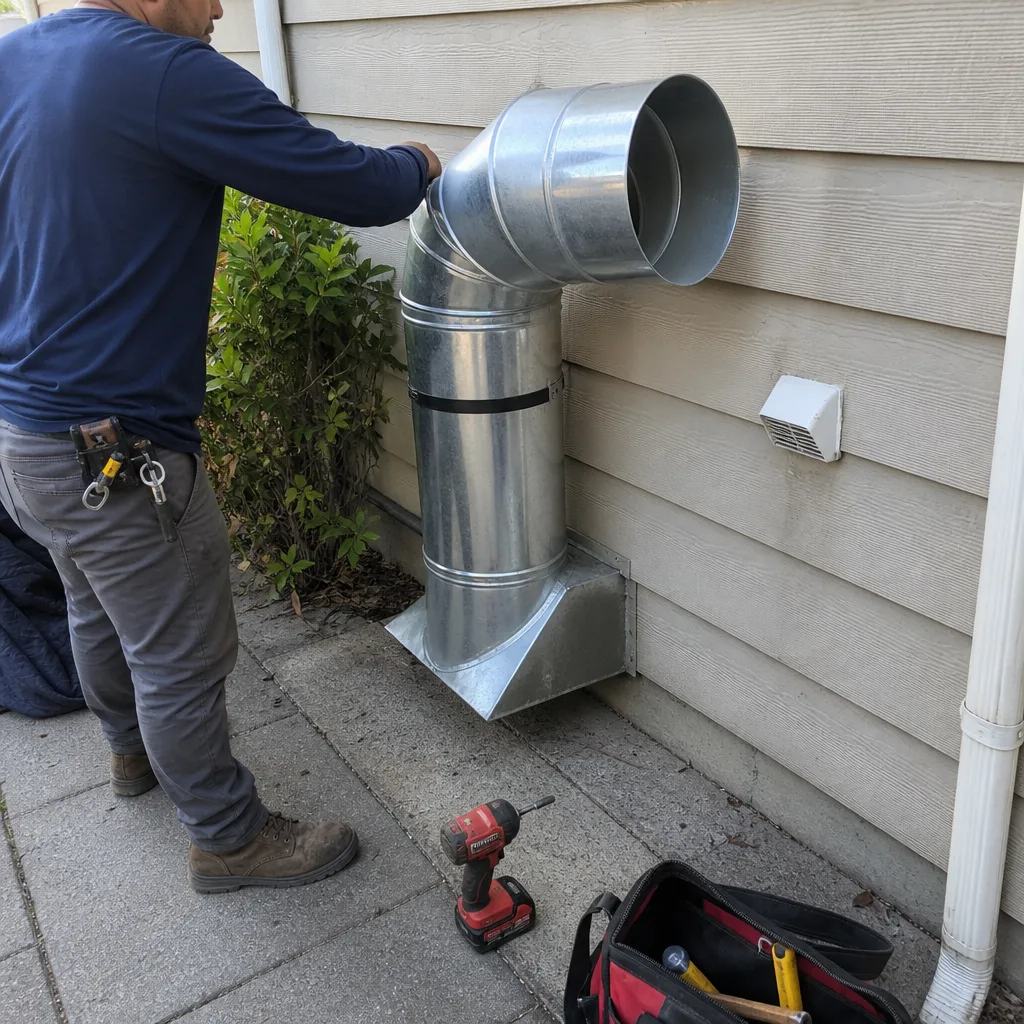 After
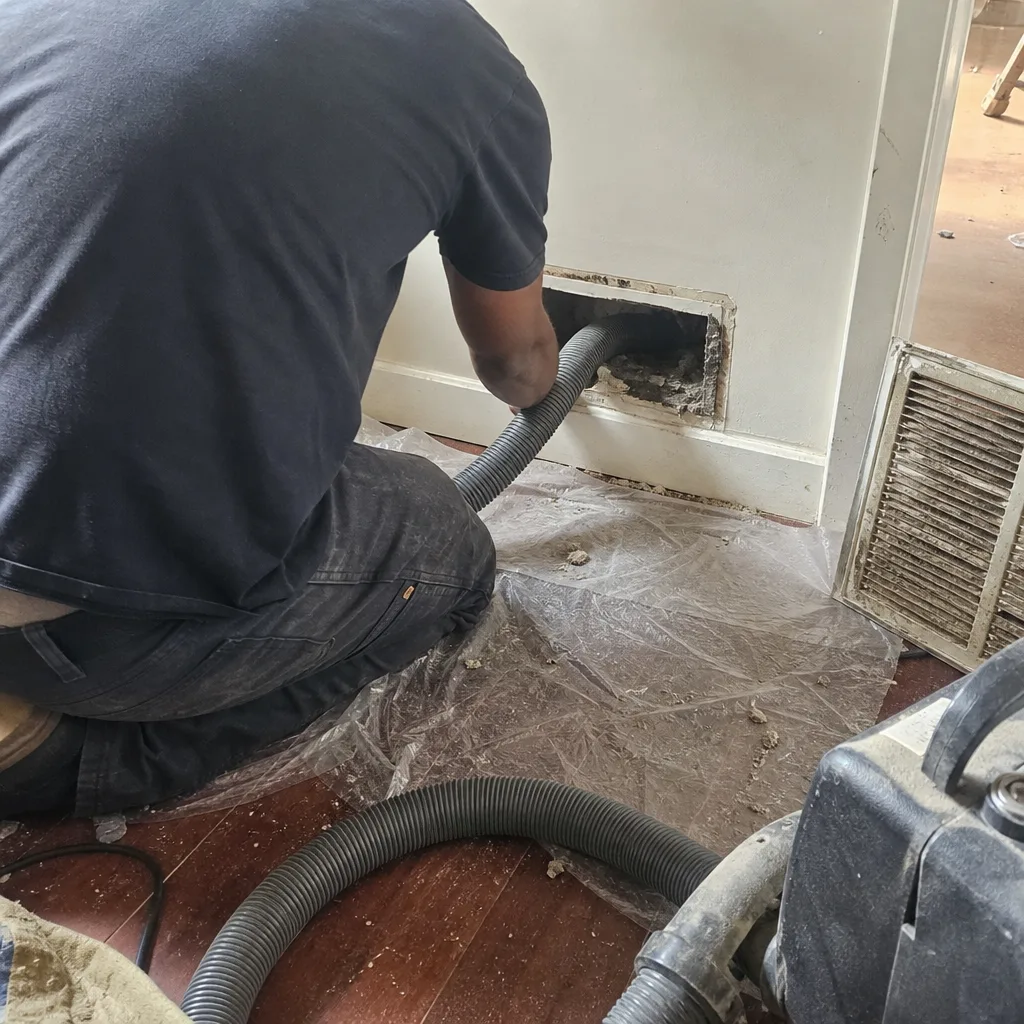 Before
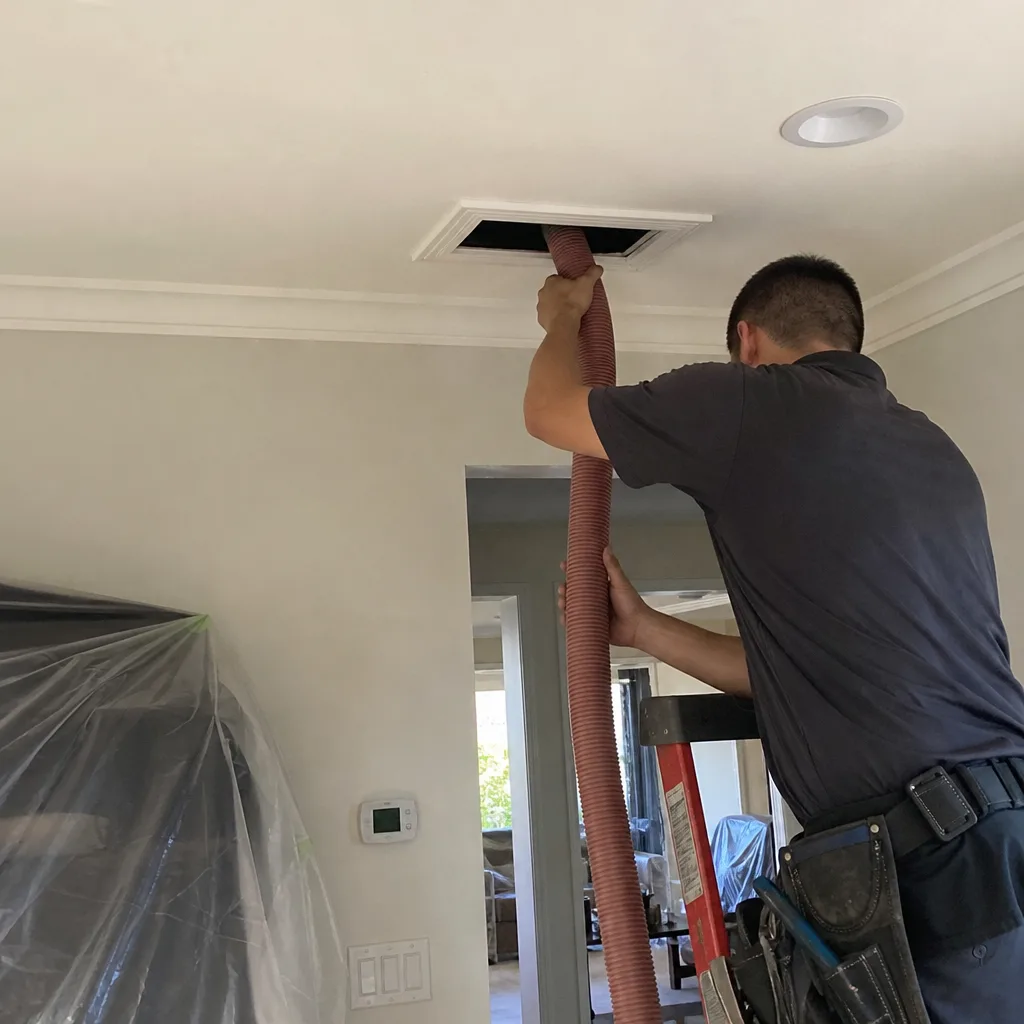 After
Frequently Asked Questions
No. Routine air duct cleaning is a maintenance activity, not a mechanical alteration, so it does not require a permit anywhere in California, including Carmel Valley and Monterey County. A permit only becomes necessary when the work involves repair, modification, replacement, or rerouting of ductwork. Call (855) 338-0352 if you’re unsure whether your project crosses that line.
Since routine duct cleaning doesn’t require a permit, there’s no cost associated with a cleaning-only job. If your situation involves duct repair or replacement, Monterey County permit fees are based on the valuation of the work – typically starting around $100 to $250 for small residential duct repairs, with fees increasing for larger scopes. The contractor handling the permit can give you an exact figure before filing.
A HERS duct leakage test measures how much conditioned air escapes from your duct system, and California’s Title 24 standards may require one when ductwork is altered, resealed, or replaced. The test is performed by an independent HERS rater and, in the Monterey County market, typically costs $250 to $500. Your building department will tell you whether your specific project triggers the requirement.
Only if the repair work stays below $500 in labor and materials and doesn’t involve modifications that California defines as C-20 contractor scope. Most meaningful duct repair – replacing flex runs, resealing plenums, modifying duct layout – legally requires a C-20 licensed contractor. You can verify any contractor’s license status free on the CSLB website.
Lower quotes often come from operators using consumer-grade equipment – essentially a shop vac with a brush attached – rather than professional systems like Rotobrush or Nikro. They may also skip the documentation, the before-and-after photos, and the written condition report that protect you downstream. The price difference usually reflects equipment, training, and thoroughness, not just overhead. Call (855) 338-0352 and we’ll explain exactly what our quote includes.
Routine cleaning doesn’t affect resale value directly, but having documentation of consistent maintenance can reassure buyers during inspection. Conversely, undisclosed duct repairs – especially unpermitted ones – can create disclosure problems during a sale. Keep records of all duct work, including cleaning invoices and photos, and you’ll be in a stronger position when it’s time to sell.
The Bottom Line
The line between “maintenance” and “mechanical work” in California is bright, but it’s not always where homeowners expect it. Cleaning is permit-free. Repair, modification, replacement, and rerouting are not. Know which side of the line your project sits on before the technician starts, verify licenses when repair scope is involved, keep documentation from every job – even cleanings – and don’t let the low-bid contractor make permit decisions for you without your informed consent. In Carmel Valley, where the housing stock is aging and local inspectors are thorough, this knowledge isn’t academic. Explore our more guides & resources to stay informed. It’s money in your pocket or money out of it, depending on how you handle the line.
Written by the team at Maple Air Duct, serving Carmel Valley since 2017.