
Last updated November 2, 2026
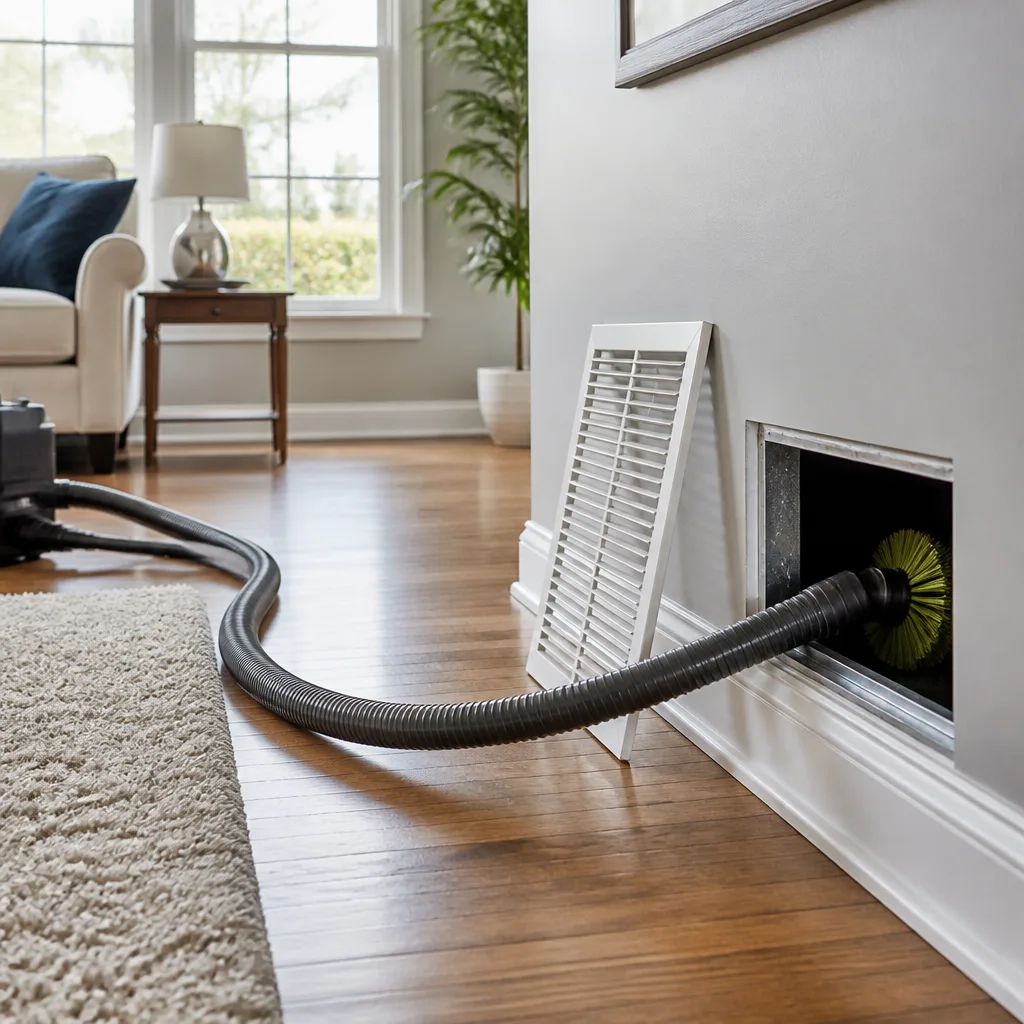 Whole-home duct cleaning
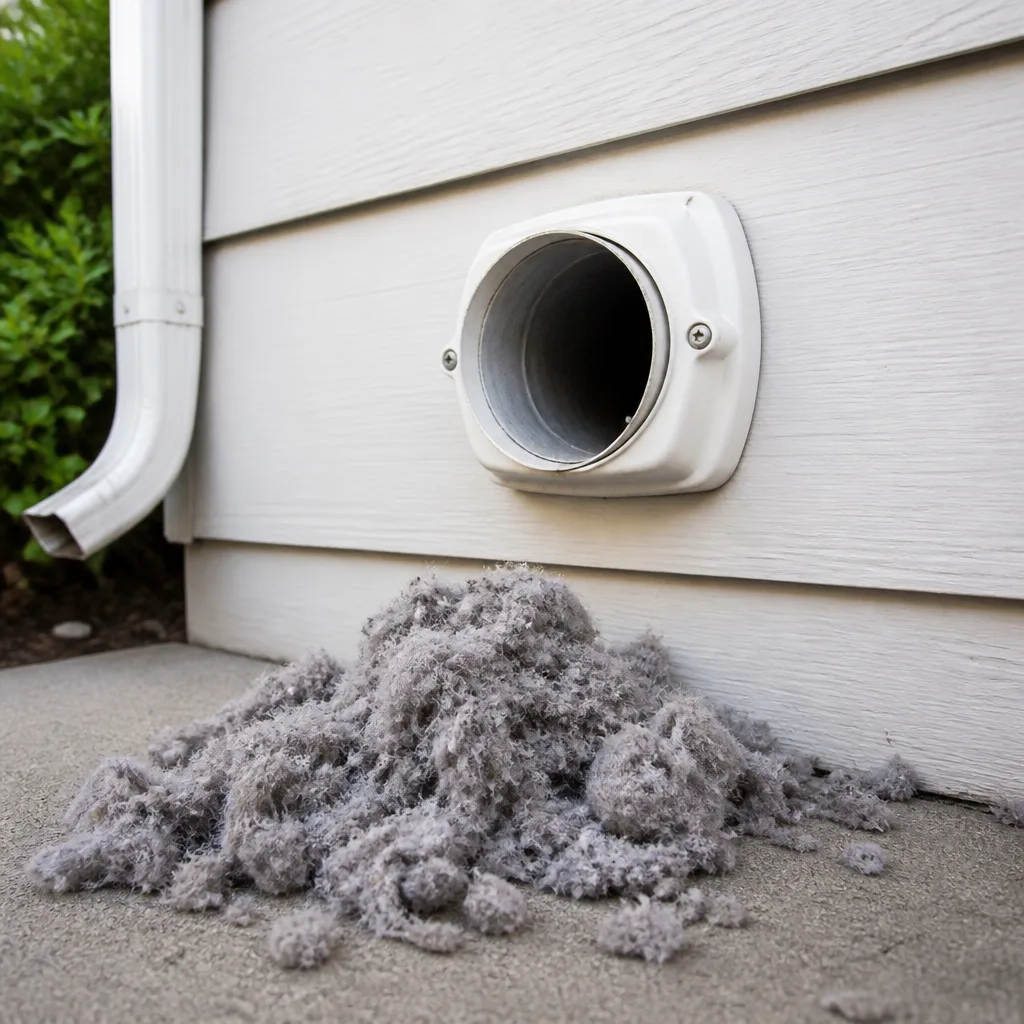 Dryer vent cleaning
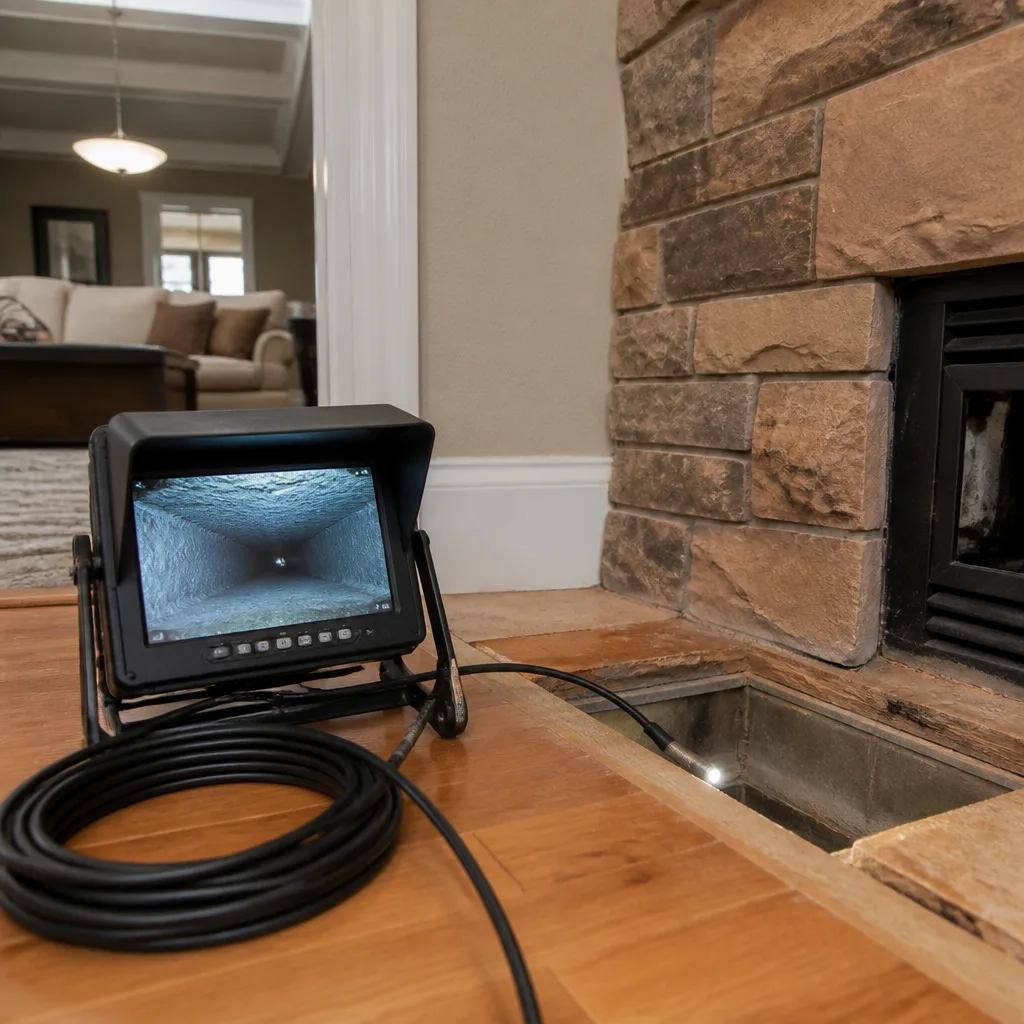 Camera inspection
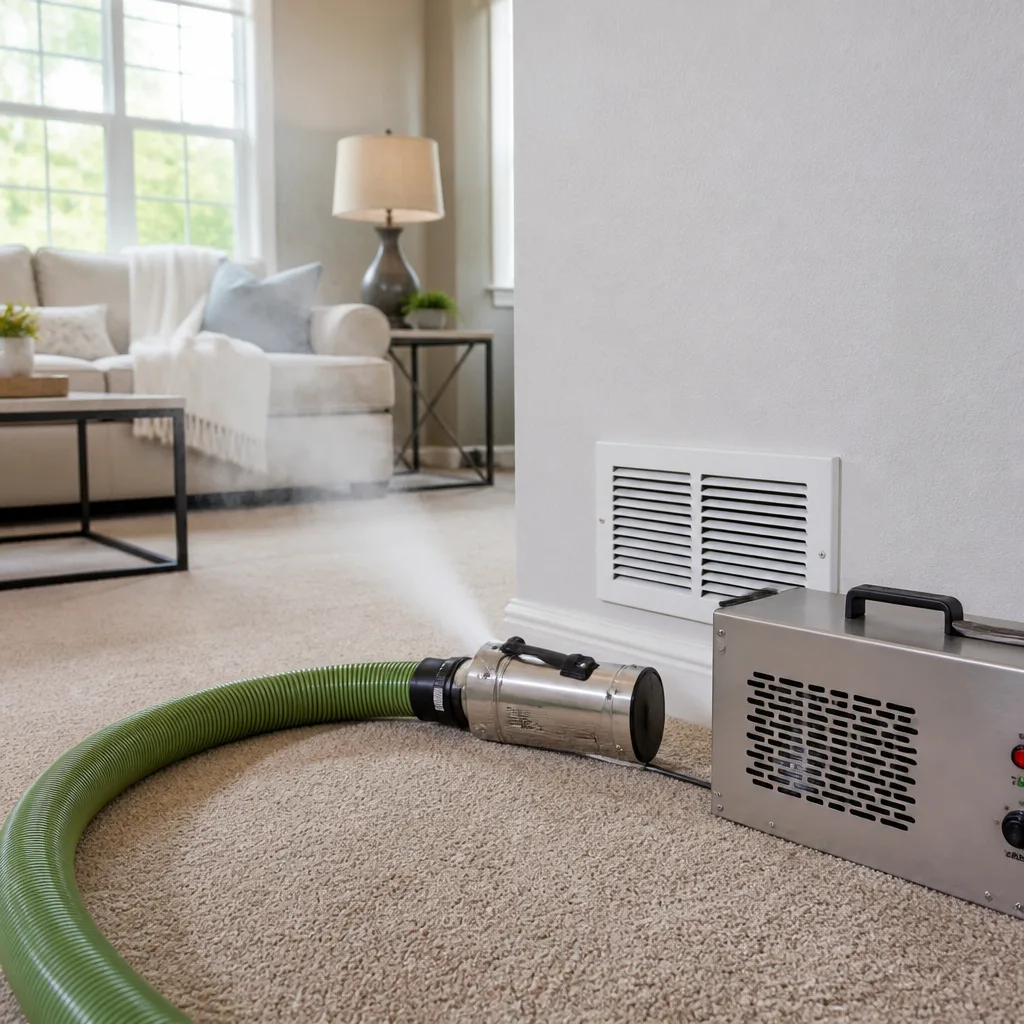 Sanitizing & deodorizing
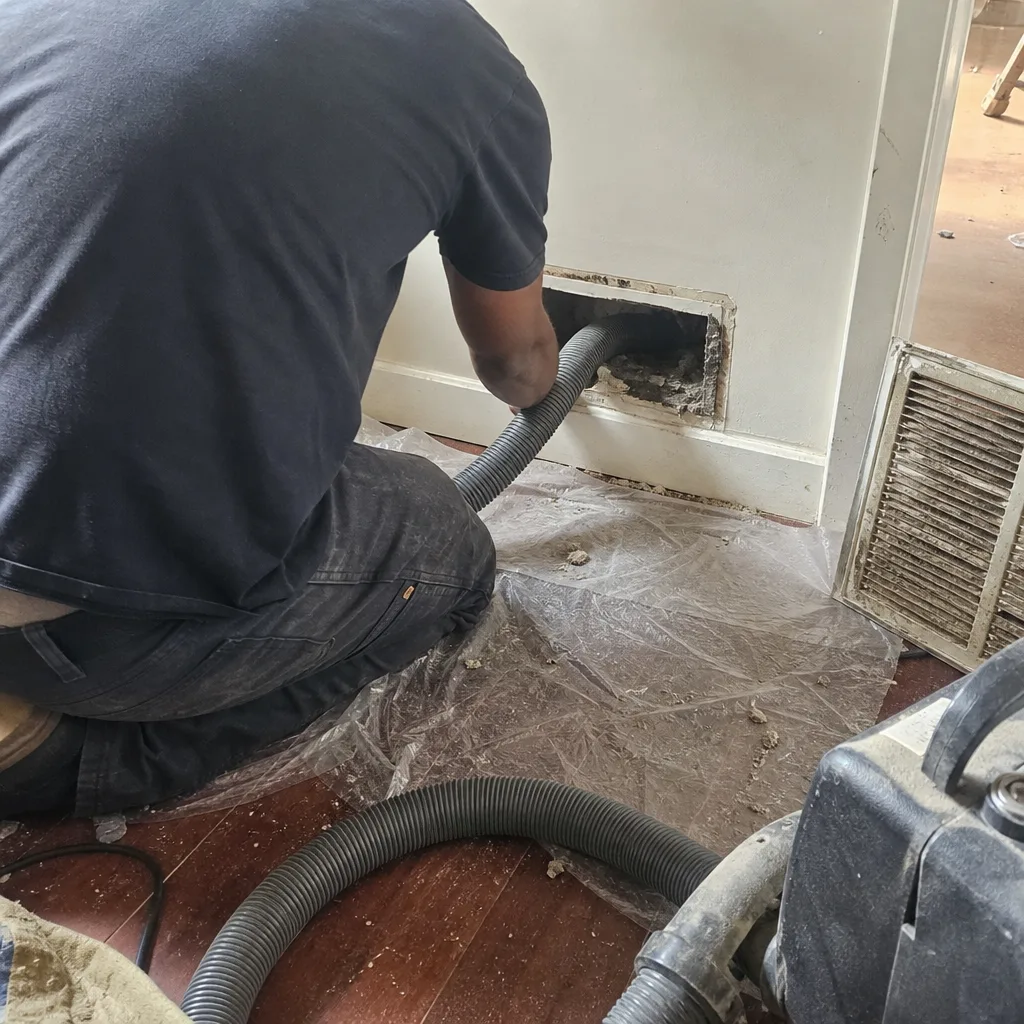
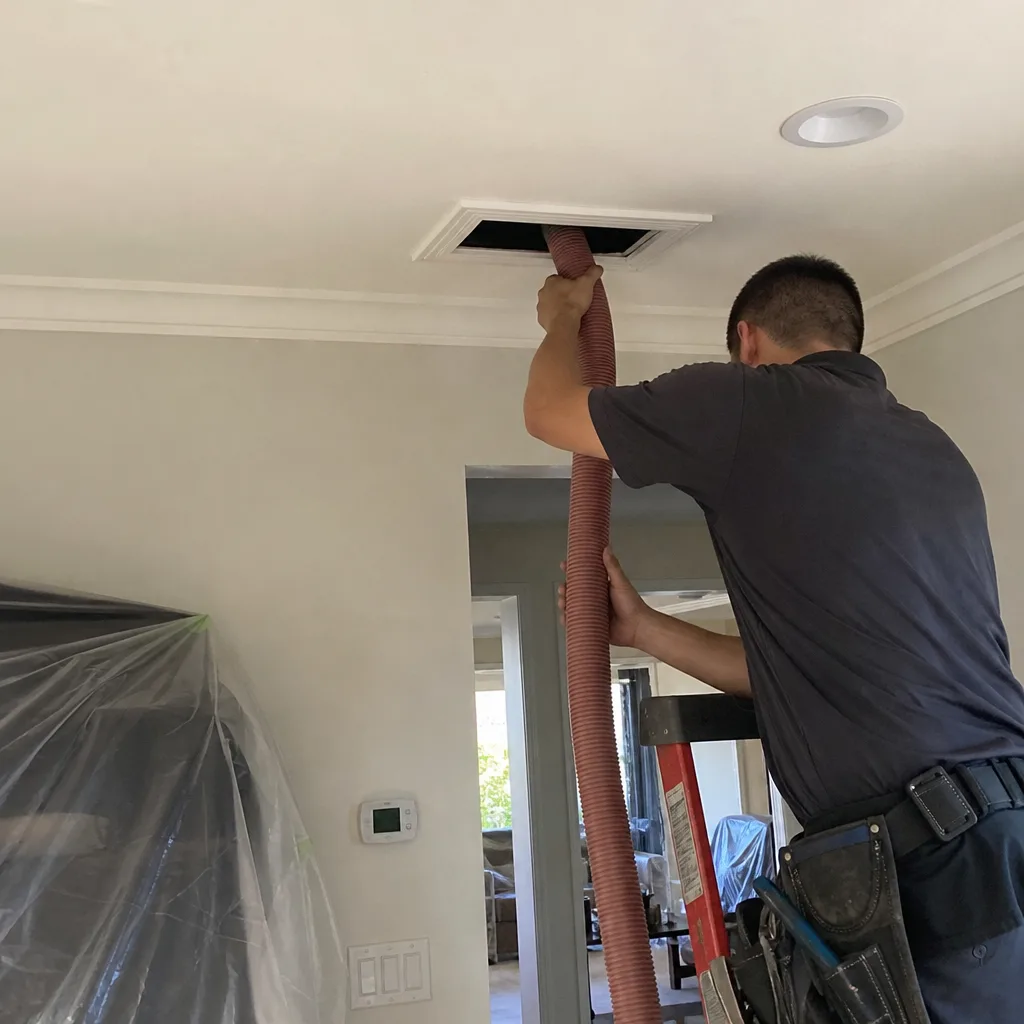
Whole-system duct and dryer vent check with before-and-after photos - you see exactly what came out of your vents
That "$99 whole-house special" is a bait ad - the real number appears once they are in your hallway, or the "clean" is a shop-vac at the register. We photograph the inside of your ducts before and after instead.
Air Duct Cleaning Emergency Preparedness Guide for Carmel Valley Homes
During a wildfire event, a forced-air HVAC system running on “auto” can pull 200-400 cubic feet per minute of smoke-laden outside air through leaky duct connections and filter bypass gaps. That turns your home’s air handling system into an active smoke distribution network, pushing fine particulate into every room, every closet, every fabric surface you own. This guide walks you through what actually happens inside a Carmel Valley duct system during a smoke event, what to do before fire season starts, what to do in the first 24 hours after an event, and how to know whether you need professional remediation or our Air Duct Cleaning services. If you live anywhere in Carmel Valley, you already know fire season is no longer a season. It’s a recurring condition.
Quick Answer
Preparing your Carmel Valley home’s air ducts for wildfire smoke means sealing return air leaks, upgrading to a properly fitted MERV-13 filter, and having a manual HVAC shutdown plan before an event. After a smoke event, the priority stops being “airing out the house” and starts being preventing contaminated air from settling into duct surfaces, because smoke particulate deposited inside supply plenums and flex duct liner doesn’t just blow away. It stays, off-gasses, and recirculates every time the system runs until it’s properly cleaned or, in severe cases, the affected duct liner is replaced.
Styles & brands we work with
- Whole-home duct cleaning
- Dryer vent cleaning
- Camera inspection
- Sanitizing & deodorizing
Table of Contents
- Why Carmel Valley Ducts Face a Different Kind of Wildfire Risk
- Pre-Season Duct Preparation: What to Do Before Fire Season
- During a Fire Event: The HVAC Shutdown Protocol
- The First 24 Hours After Smoke Reaches Your Home
- Post-Event Cleaning: What Smoke Actually Does Inside Ductwork
- How to Assess Whether You Need Remediation or Standard Cleaning
- Documenting Damage for Insurance Claims in California
- Common Mistakes to Avoid
- When to Call a Professional
- Frequently Asked Questions
Why Carmel Valley Ducts Face a Different Kind of Wildfire Risk
Carmel Valley sits on the eastern edge of San Diego’s coastal shelf, and the topography does something specific to smoke. The valley’s east-west orientation funnels air from the inland highlands toward the coast, meaning smoke from fires burning 20 or 30 miles east can arrive as a dense, low-lying haze that lingers in the valley’s microclimate for days. Homes in Carmel Valley, Torrey Highlands, and Pacific Highlands Ranch share a common vulnerability: HVAC systems designed for temperate coastal air, not wildfire smoke loads.
What most homeowners don’t realize is how much outside air their system pulls in even when every window and door is closed. A typical residential duct system in a 2,000-square-foot Carmel Valley home has a return-side leakage rate of 10-20%. That’s not a defect; it’s how most installations are built. During a smoke event, that leakage means your HVAC is actively pulling smoke into the duct system, bypassing whatever filter you have, and distributing it. The filter matters less than the leaks. That’s the uncomfortable fact most preparedness advice skips.
Our team at Maple Air Duct home has worked on duct systems throughout Carmel Valley after multiple fire seasons, and the pattern is consistent: homes with sealed return plenums and properly fitted high-MERV filtration show dramatically less smoke deposition inside supply ducts than homes with leaky returns and standard fiberglass filters. The preparation happens before the smoke arrives, not after.
Pre-Season Duct Preparation: What to Do Before Fire Season
Fire season in San Diego County now stretches from early summer through late fall, and in dry years it never really ends. Preparing your duct system in the spring or early summer gives you a window to do the work without urgency. For Air Duct Cleaning Maintenance Checklist for Carmel Valley Homeowners, see our detailed guide. Here’s the protocol we recommend for Carmel Valley homeowners, based on what we’ve seen make a measurable difference in post-event duct inspections.
1. Seal Return Air Leaks at Air Handler Connections
The return side of your HVAC system is under negative pressure. That means it actively pulls air from wherever it can find it: gaps where the return plenum connects to the air handler, holes in return ducts running through the attic or garage, and unsealed joints in panned floor joists. In a Carmel Valley home with an attic-mounted air handler, the return plenum often draws from the attic space itself, and the attic is the first place smoke goes when it arrives. Sealing these connections with mastic or UL-listed foil tape (never duct tape, which fails within a year) can cut return leakage dramatically. If you’re not comfortable inspecting your own air handler connections, a professional duct inspection will identify the gaps.
2. Upgrade to MERV-13 Filtration with Verified Fit
A MERV-13 filter does real work against smoke particulate, capturing particles in the 0.3 to 1.0 micron range that make up the bulk of wildfire smoke. But the rating is meaningless if the filter doesn’t fit the housing. We routinely find Carmel Valley homes with a MERV-13 filter sitting loose in a 1-inch filter slot, with visible gaps around the edges. Air takes the path of least resistance, and an ill-fitting filter means a portion of your return air bypasses filtration entirely. The fix is measuring the filter slot precisely and using a filter with a gasketed edge or adding weatherstripping to the filter frame so the seal is tight. If your system uses a 1-inch slot, consider having a media cabinet installed that accommodates a 4-inch or 5-inch filter with a proper seal. Honeywell and Aprilaire both make media cabinets that fit most residential systems, and the difference in seal quality versus a standard 1-inch slot is significant.
3. Establish a Manual HVAC Shutdown Plan
Your thermostat’s “auto” setting is the enemy during a smoke event. The system will cycle on when the temperature drifts, pulling smoke through leaks and pushing it into the ductwork. During a declared wildfire smoke advisory, switch your thermostat to “off” and keep it there until the outdoor air quality improves measurably. This is a manual decision; smart thermostats will not make it for you. If you rely on AC for cooling during smoke season, consider running it only during the lowest-smoke hours (typically early morning) and shutting it off when air quality degrades. Write this plan down. Post it near the thermostat. In an emergency, habits override good intentions.
During a Fire Event: The HVAC Shutdown Protocol
When smoke is actively moving into Carmel Valley, the sequence of actions matters more than the amount of time any single action takes. Here’s the step-by-step protocol we recommend, in order.
- Set the thermostat to “off” – not “auto,” not “fan only.” Full off. The blower motor circulates air even in fan-only mode, and that circulation moves smoke through the duct system.
- Close all registers in rooms you’re not using – but do not close more than 40% of total registers. Closing too many increases static pressure and can force air through leaks at higher velocity, which during a smoke event means more air moves through leaky spots and less through the filter.
- If you have a whole-home fan or attic fan, do not run it. These systems actively pull outside air into the home, which is the opposite of what you want during smoke conditions.
- Check return grilles for any visible gaps where the grille meets the wall or ceiling. A temporary seal using painter’s tape around the perimeter of the return grille (not blocking the grille entirely, but sealing perimeter gaps) can reduce the amount of unfiltered air being pulled into the system when it does cycle.
- Monitor indoor air quality visibly – if you see haze inside, that means particulate is already in the home envelope, and the priority shifts to preventing it from being pulled into the duct system.
One thing we’re asked constantly: should you run the system to “filter” the smoke out? The answer is no, and here’s why. A residential HVAC system with a MERV-13 filter will capture some smoke particulate, but the return-side leakage means you’re pulling more contaminated air into the system than you’re filtering. The filter is not the primary defense during an active event. Shutdown is.
The First 24 Hours After Smoke Reaches Your Home
The instinct after a smoke event is to open windows and run the HVAC fan to clear the smell. That instinct assumes the smoke is something to be removed from the air, when in fact by the time you can smell it indoors, a portion of it has already begun depositing on surfaces, including the inside of your ductwork. Running the system to “air out” the house moves contaminated air deeper into the duct system, where it settles into supply plenums, diffusers, and flex duct liner. Here’s what to do instead.
- Keep the HVAC off for at least the first 24 hours if outdoor air quality remains poor. If you need cooling, use portable fans or open windows only on the side of the house opposite the wind direction, and only if outdoor air quality has improved to “moderate” or better on the AQI scale.
- Seal supply and return registers with cling film or painter’s tape – this prevents particulate already in the duct system from being pulled into living spaces and prevents additional deposition from indoor air settling into the ducts through unused registers.
- Wait at least 24 hours before running the system at all. This gives heavier particulate time to settle out of the indoor air column. Running the system immediately after a smoke event is like vacuuming a room while someone shakes out a dusty rug; you’re just agitating and redistributing.
- After 24 hours, if outdoor air quality has improved, run the system on fan-only with the MERV-13 filter in place for one hour. Then remove the filter and inspect it. If it’s visibly discolored from light gray to charcoal, that’s a signal the system moved a meaningful amount of smoke particulate, and a professional assessment is warranted.
The goal of the first 24 hours is containment, not elimination. You cannot eliminate smoke from a duct system by running it. You can only prevent it from getting worse.
Post-Event Cleaning: What Smoke Actually Does Inside Ductwork
Smoke particulate is not dirt. Dirt in a duct system is relatively large, relatively heavy, and deposits primarily on the bottom of horizontal runs. Smoke particulate is sub-micron, electrically charged in some cases, and deposits evenly on all surfaces: the top, bottom, and sides of ducts, the interior of the supply plenum, the motor housing of the blower, and critically, the interior liner of flexible duct runs. That last surface is the one that causes the most trouble.
Flex duct liner is a porous, fibrous material. Smoke particulate works its way into the fiber matrix the way soot works into upholstery. Surface cleaning with a brush or negative-air vacuum will remove some of it, but deeply embedded particulate remains. In severe smoke exposure, the liner holds the smoke’s odor and off-gasses it for months. We’ve inspected Carmel Valley homes where the duct cleaning was done properly, but the smoke smell persisted because the flex duct liner had absorbed volatile organic compounds from the smoke. In those cases, the affected flex runs were replaced rather than cleaned. A professional assessment will tell you which path applies to your system.
Our equipment matters here. Air Duct Cleaning in Carmel Valley using a Rotobrush or Nikro system applies mechanical agitation to duct surfaces while a negative-air vacuum collects dislodged material at the source. That’s the difference between cleaning that moves dust around and cleaning that removes it. For smoke-contaminated systems specifically, the agitation step matters more than in standard cleaning because smoke particulate bonds to surfaces more tightly than household dust. We also run Abatement Technologies air filtration equipment during smoke remediation jobs, which scrubs the indoor air while we work rather than letting agitated particulate resettle.
Activated Carbon and Odor Control
For homes where smoke odor persists after duct cleaning, the next step is activated carbon filtration. Carbon works by adsorption, a chemical process where gas-phase molecules bond to the carbon’s surface area. A standard MERV-13 filter captures particulate but does nothing for odor-causing gases. Systems from Aprilaire integrate carbon filtration into whole-home air cleaners that sit in the duct path. If your Carmel Valley home has an existing Aprilaire or Honeywell filtration cabinet, a smoke event is the scenario where that investment pays off. If you don’t, and you’re in a smoke-prone area, it’s worth discussing with a professional whether a media cabinet with carbon-stage filtration makes sense for your system.
How to Assess Whether You Need Remediation or Standard Cleaning
Not every smoke event warrants full remediation. A light haze that lasts a few hours with a heating system that stayed off will deposit far less than a multi-day event where the system ran normally. There’s a field-expedient test we recommend for Carmel Valley homeowners, and it takes about five minutes.
Take a clean white cloth or paper towel and wipe the inside surface of several supply registers. Use a dry cloth, not a damp one. If the cloth comes back light gray, that indicates surface deposition that a standard duct cleaning will address. If the cloth comes back dark gray to black, with a greasy or sticky residue, that’s a sign of heavy smoke deposition. That residue is a mixture of fine particulate and condensed oils from burned vegetation, and it requires more aggressive mechanical cleaning. If the cloth comes back clean but you still smell smoke when the system runs, the contamination is likely deeper in the system – inside the supply plenum or the flex duct liner – and a camera inspection is the next step.
Here’s a practical breakdown of the two response levels.
- Standard cleaning: Light surface deposition, no persistent odor, system was off during most of the event. A standard duct cleaning with mechanical agitation (Rotobrush or Nikro) and negative-air collection addresses this.
- Smoke remediation: Heavy deposition visible at registers, persistent odor, system ran during the event. Requires mechanical cleaning plus carbon filtration, and may require replacement of affected flex duct runs or blower cleaning. This is where the full scope of Air Duct Repair in Carmel Valley becomes relevant: if we find smoke-damaged ductwork that can’t be cleaned back to acceptable condition, we don’t walk away and leave you with the problem.
Documenting Damage for Insurance Claims in California
Most California homeowner policies cover smoke damage to duct systems under the dwelling or personal property provisions, but the claim will be judged on documentation. For details on Air Duct Cleaning Permits, Codes & Inspections in CA: What You Need to Know, review our compliance guide. Insurance adjusters are generalists. They don’t know what a supply plenum is or why flex duct liner absorbs odor. The more specific and comprehensive your documentation, the more likely the claim is approved.
Here’s what to document from the moment a smoke event occurs.
- Photos of outdoor air quality during the event, ideally with a visible AQI reading from a phone screen or weather station. This establishes the severity of exposure.
- Photos of every register and return grille before cleaning, including close-ups of any visible dust or staining on the grille surface. Do this before anyone cleans anything.
- A written log of when the system ran and when it was off during the event. If you implemented the shutdown protocol, that log supports the claim that the system was not run during peak smoke. If the system did run, the log documents the exposure window.
- The white cloth test, photographed with date and time. Label each photo with the room it came from.
- A professional inspection report from a duct cleaning or air quality company that documents what was found, what was cleaned, and what was recommended. If flex duct replacement was recommended, the report should state specifically which runs and why.
- Receipts for air filters, portable air purifiers, or any other mitigation you purchased during or immediately after the event.
One note from experience: insurance adjusters respond far better to professional equipment-based documentation than to homeowner testimony. A report that says “duct system inspected with camera scope; smoke deposition observed in supply plenum and blower housing; mechanical cleaning performed with Nikro agitation system; residual odor in flex duct liner recommending replacement of 3 runs” gets approved faster than a report that says “ducts cleaned, smells better now.” Specificity is the currency of claims.
Common Mistakes to Avoid
- Running the HVAC on “auto” during a smoke advisory. This is the single most damaging mistake, because the system pulls smoke through return leaks and distributes it. If you remember nothing else from this guide, remember to set the thermostat to “off” during smoke events.
- Changing the filter immediately after the smoke clears and calling it done. The filter caught what the filter caught. Everything that bypassed through leaks or settled in the plenum is still there, and it will recirculate for months.
- Assuming a standard duct cleaning fixes smoke odor. Smoke particulate penetrates flex duct liner and other porous surfaces. Mechanical cleaning removes what’s on the surface. Deeply embedded particulate may require liner replacement.
- Blocking all your registers during an event. Closing 100% of registers increases static pressure and can force air through leaks with greater velocity, pulling more smoke into the system when it does cycle. Cap it at 40% closure.
- Not documenting anything because you were busy dealing with the emergency. The twenty minutes it takes to photograph registers and take AQI screenshots is the difference between an approved claim and a denied one.
- Hiring based on the lowest bid after a smoke event. Smoke remediation requires professional equipment like Rotobrush or Nikro systems with negative-air collection. A tech with a shop vac will move smoke particulate around, not remove it.
- Forgetting the dryer vent. During a smoke event, the dryer vent is an open pathway from the outside to the inside of your home. Smoke enters through the vent, and lint accumulated in the vent line absorbs smoke odor. Dryer Vent Cleaning in Carmel Valley after a smoke event is part of the full remediation picture, not an optional add-on.
When to Call a Professional
You need a professional assessment if any of these apply: the white cloth test shows dark gray or black residue at any register, you smell smoke when the system runs even after the air clears outdoors, the system ran during a heavy smoke event, or visible soot is present around return grilles and air handler connections. These are all indicators that the contamination is inside the duct system, not just on your surfaces. A professional with camera inspection equipment can confirm the extent of deposition and recommend cleaning, carbon filtration, or duct repair as the situation requires. Maple Air Duct offers free estimates in Carmel Valley. Call (855) 338-0352 and we’ll schedule an inspection with the same Rotobrush and Nikro equipment we use on every job.
Frequently Asked Questions
Wipe the inside of your supply registers with a dry white cloth. If the cloth comes back gray or black, smoke particulate has deposited inside the duct system. If the cloth is clean but you smell smoke when the system runs, the contamination is deeper in the system and requires a camera inspection to confirm.
For homes in Carmel Valley that experience regular wildfire smoke exposure, we recommend a duct inspection annually and cleaning every 3 to 5 years under normal conditions, or after any significant smoke event. Homes with pets, recent renovation, or occupants with respiratory conditions may need more frequent attention. The answer depends on what’s actually in your ducts, which an inspection will show you.
No, and the reason is that return-side leakage is the problem, not the filter. A MERV-13 filter only works on air that actually passes through it. Air pulled through leaks in the return plenum bypasses the filter entirely. During a smoke event, shut the system off and keep it off until outdoor air quality improves.
Most California homeowner policies cover smoke damage to the dwelling, which includes the duct system, if the damage is documented. The key is evidence: photos of AQI readings, photos of registers and grilles before cleaning, a written log of system operation during the event, and a professional inspection report. Submit all of it with the claim, not just the invoice.
Smoke odor that persists after duct cleaning is usually embedded in flex duct liner or other porous materials inside the system. Surface cleaning doesn’t reach smoke particulate that has worked into the fiber matrix. In severe cases, the affected flex runs need replacement. A camera inspection will show whether the liner is the source.
Yes, replace the filter after any meaningful smoke event, even if it doesn’t look heavily loaded. Smoke particulate is sub-micron and filters can be saturated without appearing dirty. If your filter is visibly discolored after the event, consider that a signal that the system moved significant smoke volume and schedule a professional duct inspection. Call (855) 338-0352 for a free estimate.
The Bottom Line
Carmel Valley’s position in California’s wildfire interface zone means your duct system is a smoke vector whether you think about it or not. The preparation is straightforward: seal return leaks, fit a proper MERV-13 filter, and have a shutdown plan. The response after an event is equally straightforward: keep the system off, document everything, and assess deposition before running it again. The difference between a home that recovers quickly and one that smells like smoke for a year comes down to whether the duct system received the same attention as the floors and furniture. Your ducts hold more smoke than you think, and they give it back slowly, every time the blower runs. Clean it properly. Repair what can’t be cleaned. Done.
Written by the team at Maple Air Duct, serving Carmel Valley since 2017.
See the difference
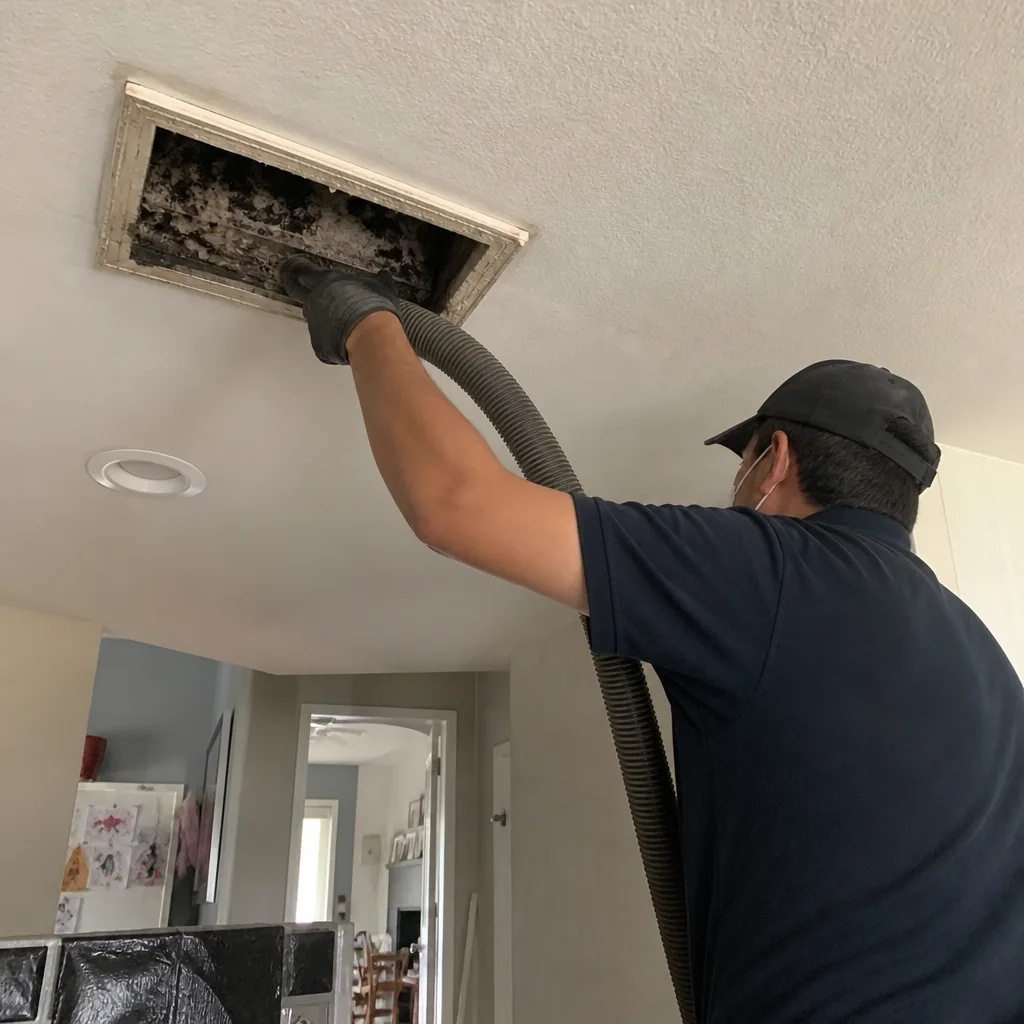 Before
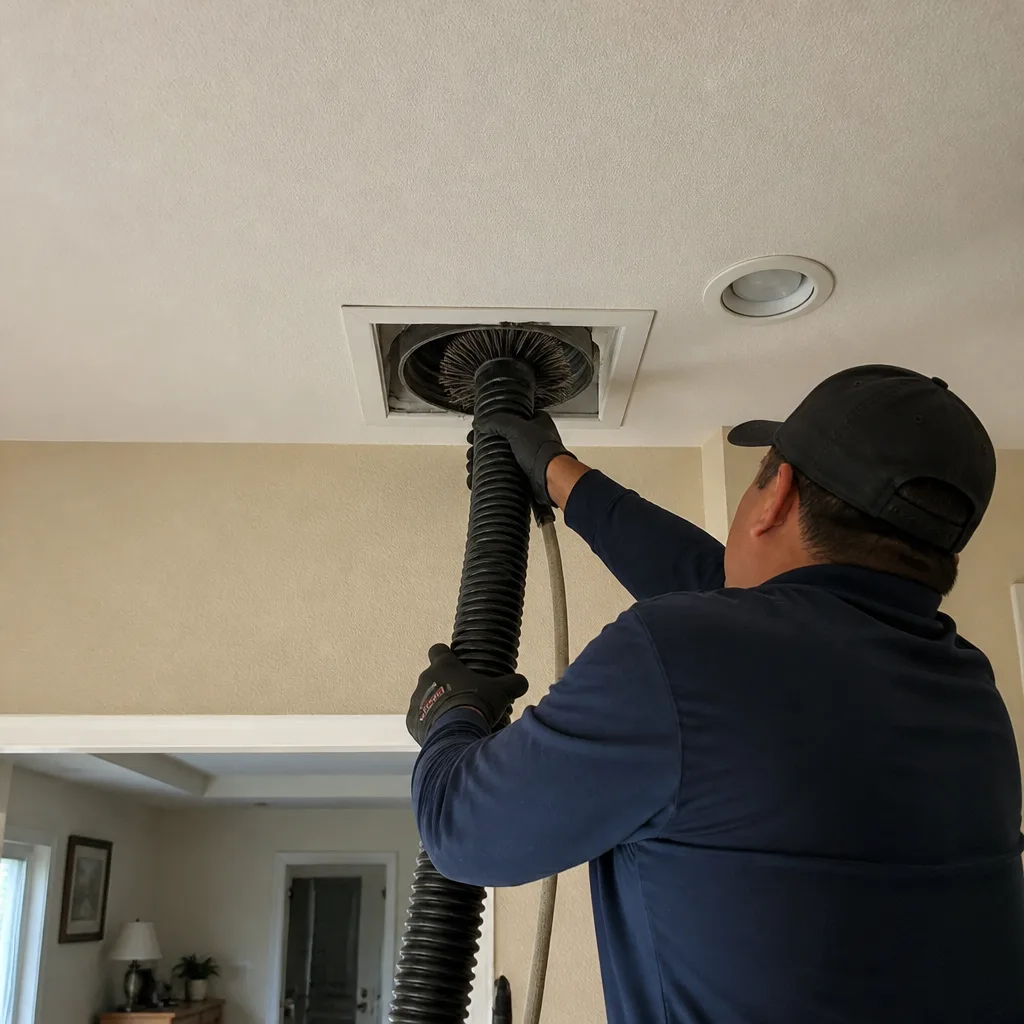 After
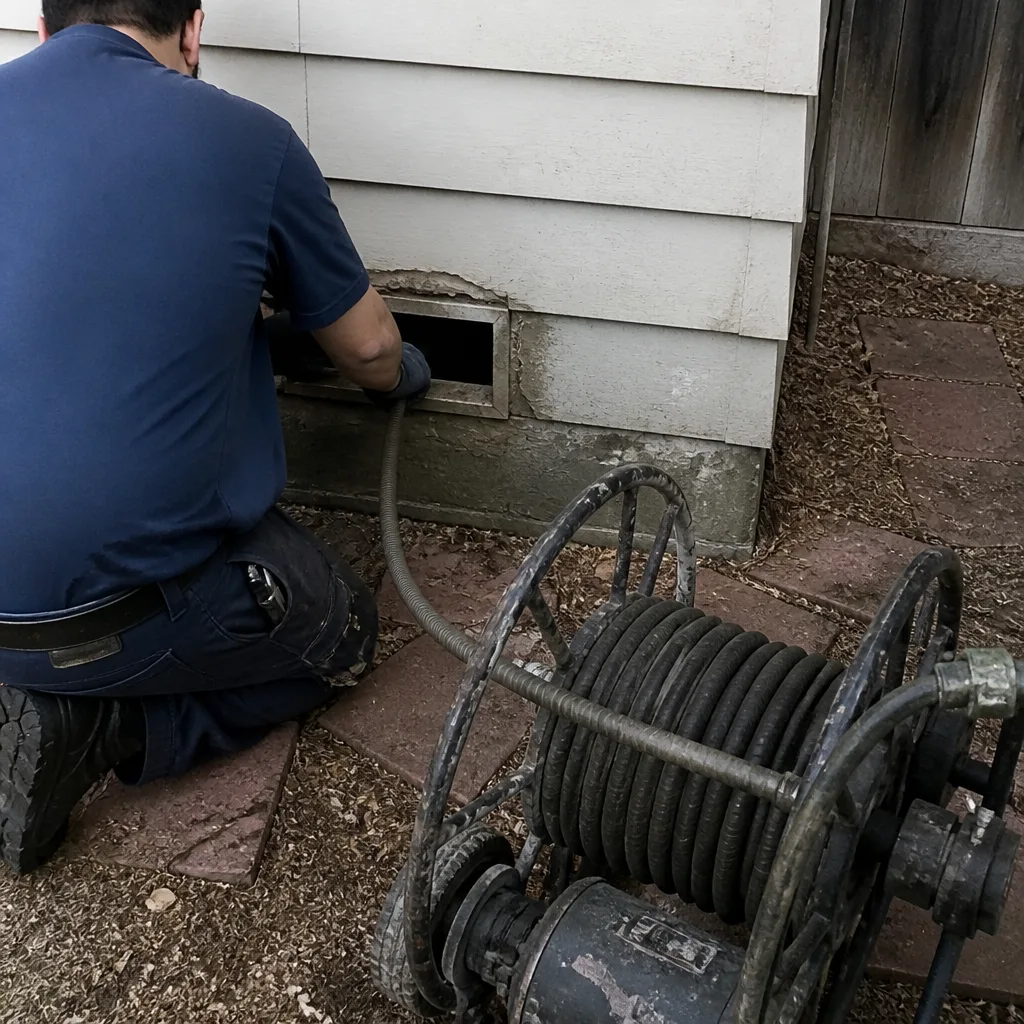 Before
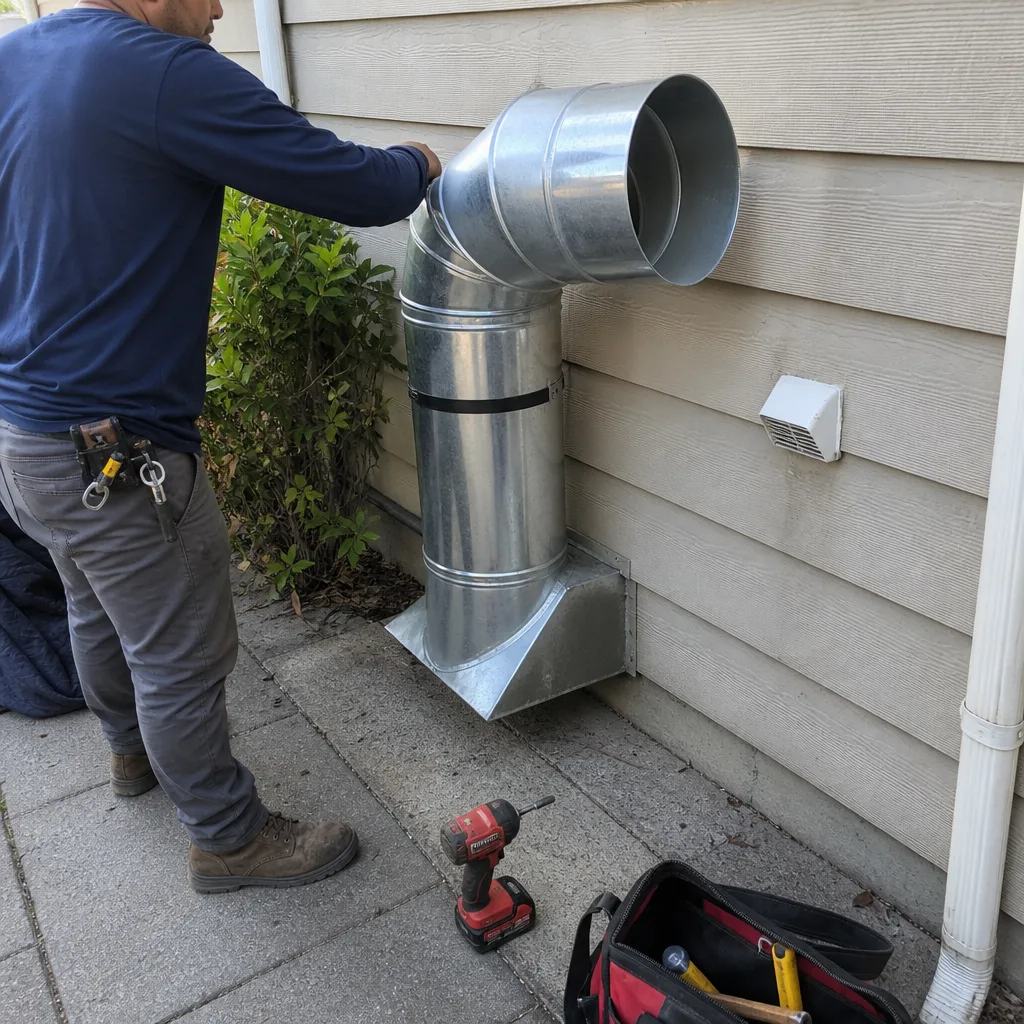 After
 Before
 After