
Last updated November 2, 2026
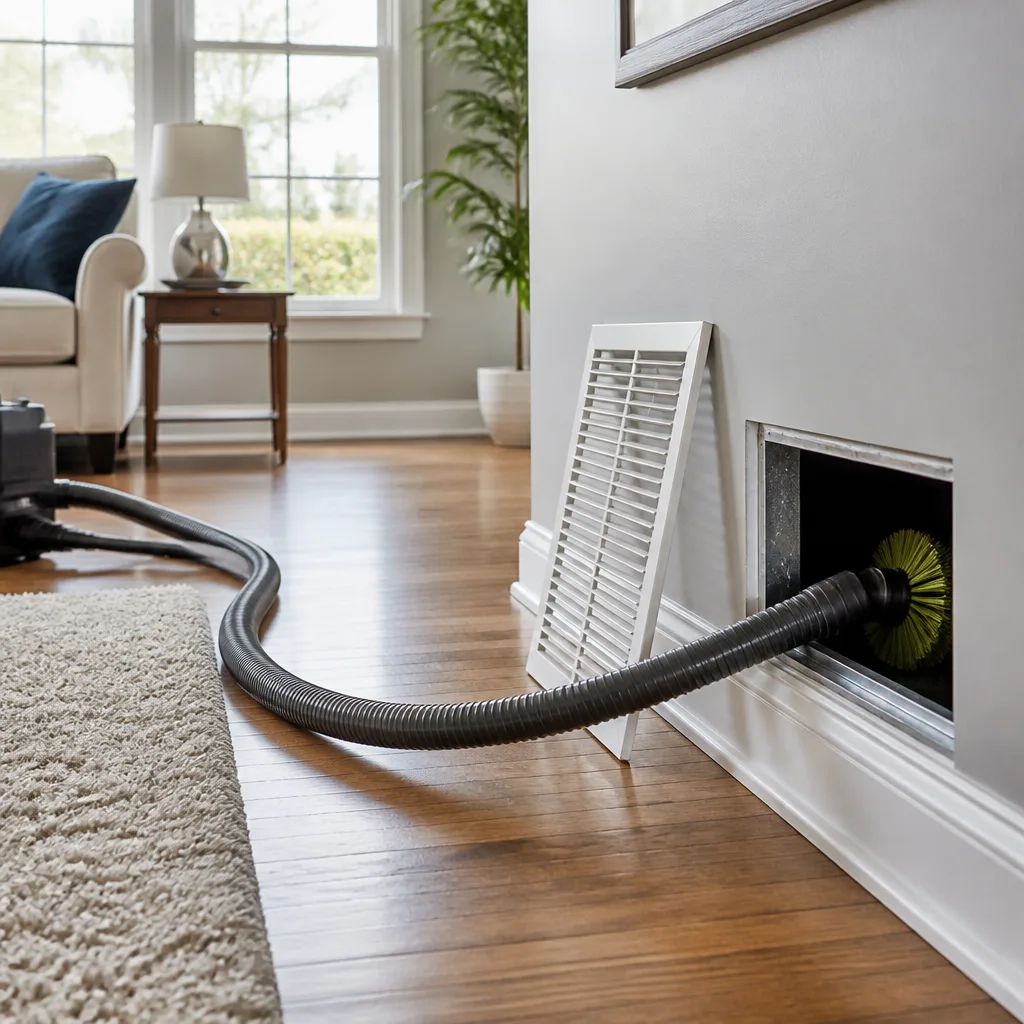 Whole-home duct cleaning
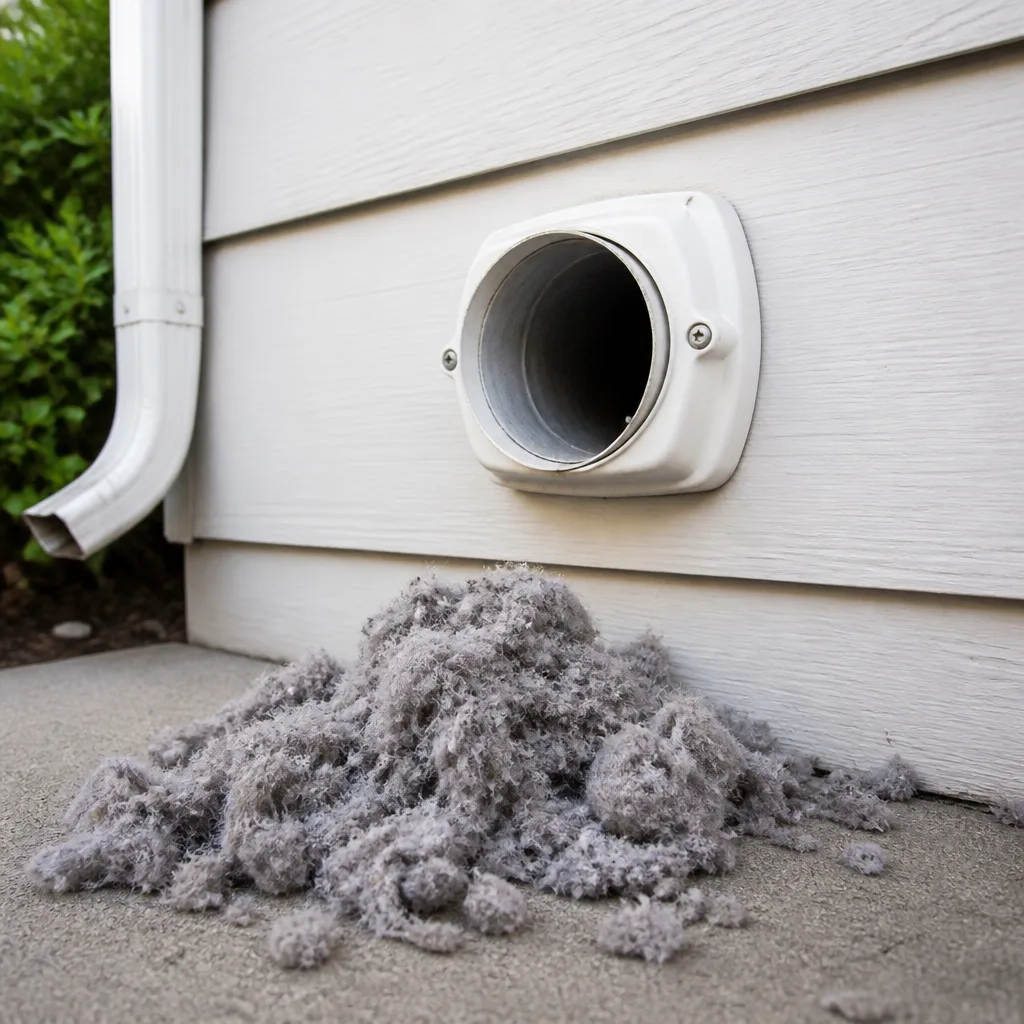 Dryer vent cleaning
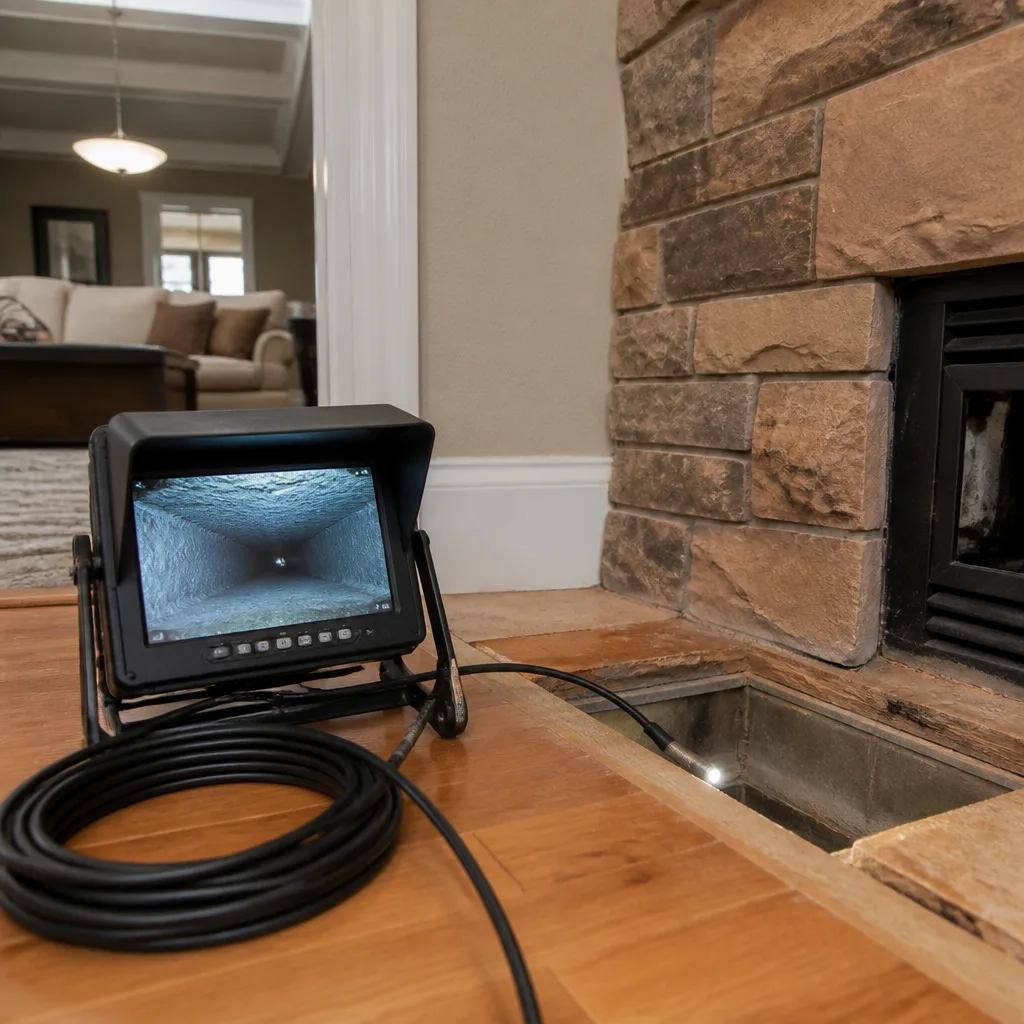 Camera inspection
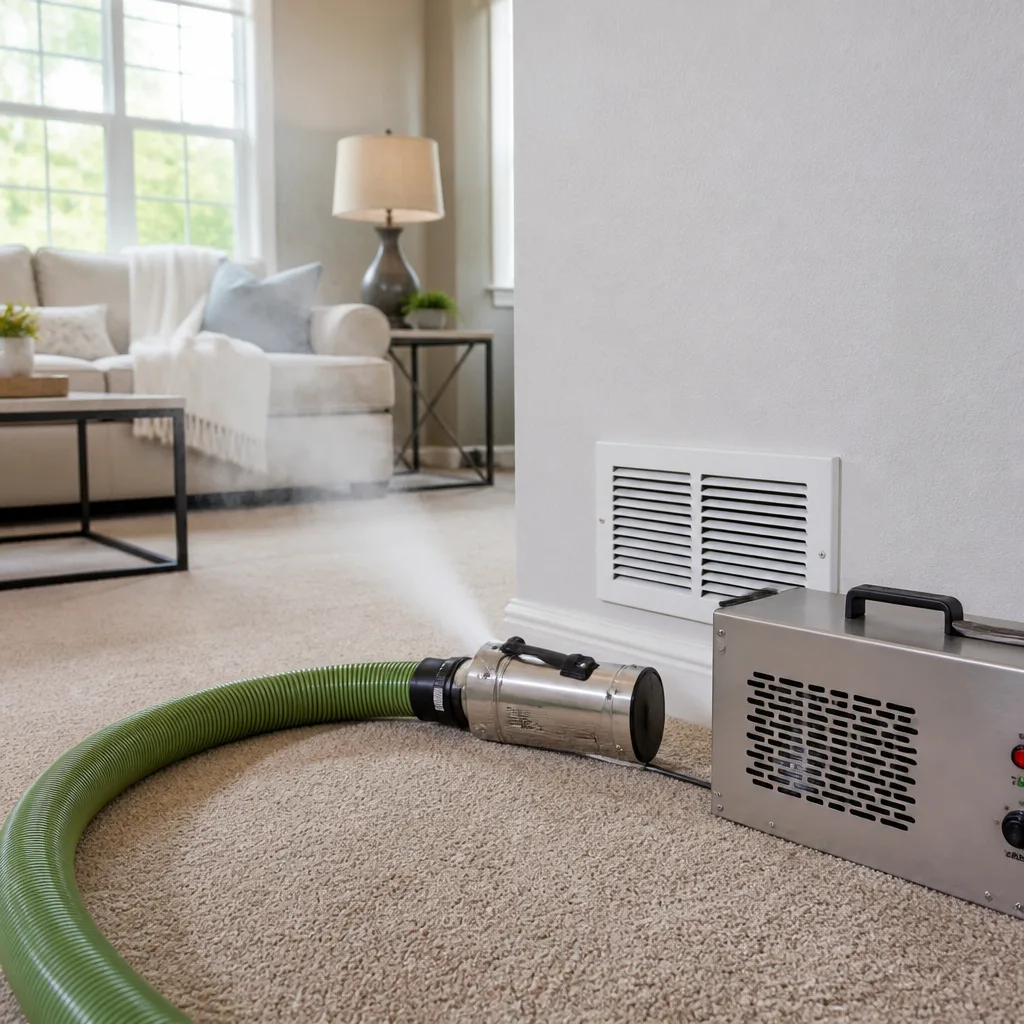 Sanitizing & deodorizing
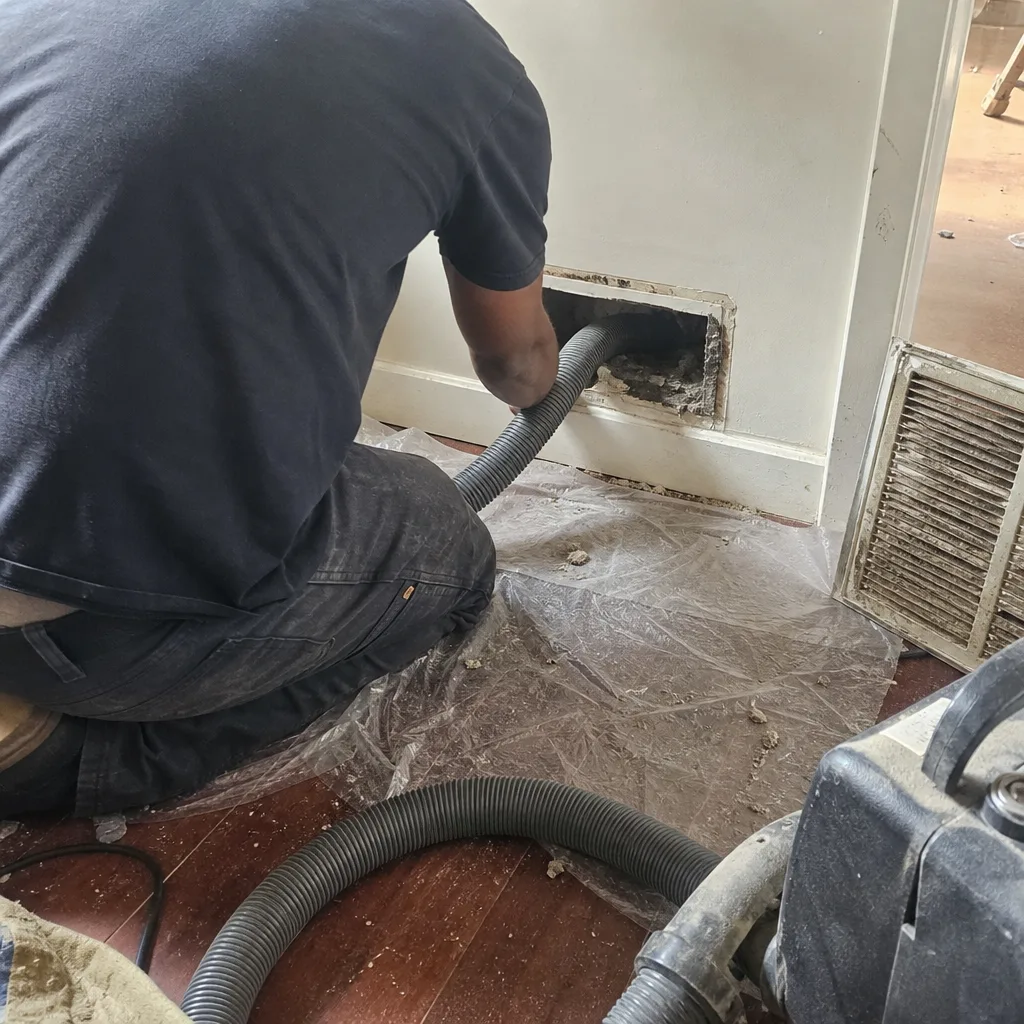
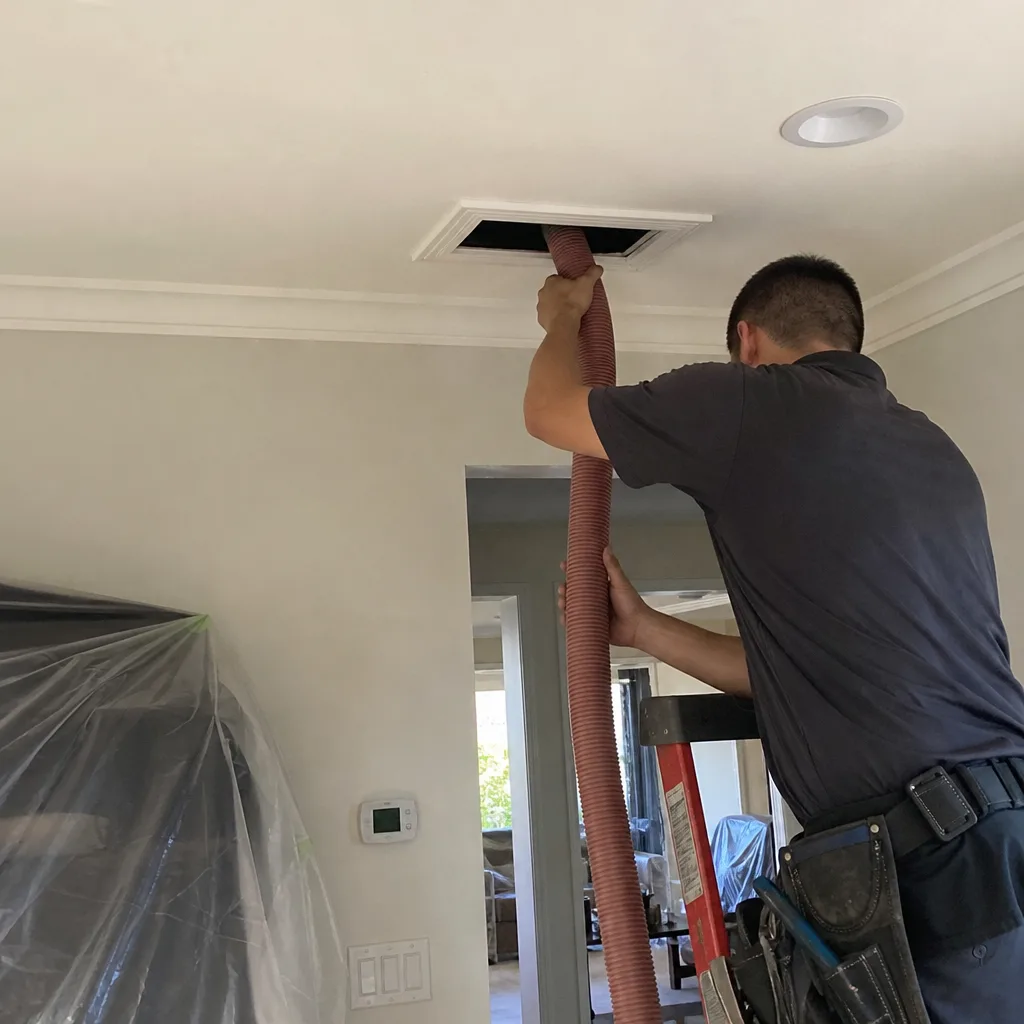
Whole-system duct and dryer vent check with before-and-after photos - you see exactly what came out of your vents
That "$99 whole-house special" is a bait ad - the real number appears once they are in your hallway, or the "clean" is a shop-vac at the register. We photograph the inside of your ducts before and after instead.
How to Hire an Air Duct Cleaning Contractor in Carmel Valley: A Step-by-Step Guide
In California, anyone with a van and a leaf blower can legally offer air duct cleaning. The $99 whole-house special that shows up in your mailbox and the company using a Nikro negative-air machine with a Rotobrush agitation system are operating in the same unregulated space, and the results are not remotely comparable. This guide exists because Carmel Valley homeowners shouldn’t need a mechanical engineering degree to tell the difference. By the time you finish reading, you’ll know the exact questions that separate a legitimate contractor from an expensive mistake, how to read a quote like a technician would, and what a real duct cleaning should include. We’ve seen what happens when homeowners skip these steps, and it usually costs more to fix than the original cleaning would have cost done right.
Styles & brands we work with
- Whole-home duct cleaning
- Dryer vent cleaning
- Camera inspection
- Sanitizing & deodorizing
Quick Answer
To hire an air duct cleaning contractor in Carmel Valley, verify three things before booking: the specific equipment they use (negative air machines with 2,000+ CFM, not portable shop vacs), whether their quote itemizes every supply branch, return, and the air handler compartment, and whether they document the job with photos of your actual ductwork before and after. In Carmel Valley, typical whole-house air duct cleaning runs $450 to $900 depending on system size and contamination level – see our Air Duct Cleaning Cost Breakdown: The Carmel Valley Homeowner’s Reference for 2026 for detailed pricing factors. Get a flat per-system price in writing, verify NADCA membership plus California contractor licensing, and confirm the company repairs what it finds rather than cleaning around damage and leaving it for someone else to handle.
Table of Contents
- The Licensing Loophole: Why Hiring in California Is Different
- The Three Equipment Questions to Ask Before Booking
- How to Read a Scope-of-Work Quote
- Why NADCA Membership Matters (But Isn’t Enough in California)
- How Bait-and-Switch Pricing Works and What Stops It
- The Post-Job Walkthrough: What to Demand Before You Pay
- Carmel Valley-Specific Factors That Affect Your Ducts
- Common Mistakes to Avoid
- When to Call a Professional
- Frequently Asked Questions
- The Bottom Line
The Licensing Loophole: Why Hiring in California Is Different
California has no state-level license specifically for air duct cleaning. None. The Contractors State License Board regulates HVAC contractors under the C-20 classification, but a company can legally call itself an air duct cleaner without holding any CSLB credential at all. What they need is a business license from the county or city, which requires nothing more than a fee and a mailing address. This regulatory vacuum is why Carmel Valley, despite being one of San Diego’s more affluent communities, sees the same flood of under-qualified operators as everywhere else in the state.
The practical consequence: verification falls entirely on you, the homeowner. In a licensed trade, the license number does the vetting. Here, you have to reconstruct that vetting yourself. The good news is that the process is straightforward once you know what to ask, and every question we’re about to walk through takes less than two minutes on the phone. The bad news is that almost no one asks them, which is precisely why the low-rent operators keep getting work.
One more California-specific note: if a contractor damages your ductwork during cleaning, your recourse depends entirely on their insurance, not any regulatory body. Always confirm they carry general liability coverage before scheduling. Ask for the policy number and call to verify. A legitimate operator in Carmel Valley will provide this without hesitation, in our experience.
The Three Equipment Questions to Ask Before Booking
Equipment is the tell. In an unregulated market, the tools a contractor brings to the job are the single most reliable indicator of what kind of work you’re actually buying. Here are the three questions to ask on the phone, and the answers that should reassure you.
- What negative air machine do you run, and what’s the CFM rating? A real duct cleaning uses negative air pressure to pull debris out while agitation loosens it. The machine creating that pressure is the heart of the operation. Look for units rated at 2,000 CFM or higher. The industry-standard names to listen for are Nikro and Rotobrush. These are the brands used in commercial, remediation, and restoration work. If the answer is “a powerful truck-mounted vacuum” without a brand or CFM number, that’s a miss. If the answer is “we use HEPA-filtered portable units” with a CFM under 1,500, that’s a shop vac in a nicer jacket.
- What agitation method do you use on the branch lines? Negative air alone doesn’t clean. You need mechanical agitation inside the ductwork to break loose the debris that’s adhered to the walls. The best answer is a powered rotary brush system (like Rotobrush) or air whip/skipper systems run off compressed air. “We just vacuum” is not an agitation method. “We use a spinning brush on a drill” is acceptable for short runs but below professional standard for full systems.
- Do you carry HEPA filtration on the exhaust side? A proper negative air machine is exhausted outdoors or through HEPA filtration. Without filtration, you’re pulling dust out of your ducts and into your living room. This is also the question that separates basic cleaners from companies equipped for contamination-level work. Abatement Technologies gear, for instance, is what you’d see on remediation jobs. A company carrying that equipment is signaling a capability ceiling far above the baseline.
We should be direct here: Maple Air Duct runs Rotobrush and Nikro systems on every job, with Abatement Technologies filtration available for elevated contamination scenarios. That’s not a marketing line. It’s the difference between cleaning ducts and convincing yourself you cleaned ducts. Ask any contractor you’re vetting the same three questions and see what kind of answers come back.
What Acceptable Answers Sound Like
When you ask these questions, you’re listening less for brand names and more for fluency. A technician who knows their equipment can tell you the CFM, the filter change interval, and the last time the machine was serviced without thinking. A salesperson who rented a machine last week will say “it’s all professional-grade equipment” and hope you stop asking. Keep asking. The answers, or lack of them, tell you everything about what’s going to show up in your driveway.
How to Read a Scope-of-Work Quote
Most duct cleaning quotes in Carmel Valley are one line: “Full system cleaning: $XXX.” That single line is a blank check with a ceiling. Here’s what a real scope of work looks like in writing, and why each line item exists.
A legitimate quote should itemize, at minimum:
- All supply branches. Every register in the house represents a branch line running back to the trunk. If the quote says “up to 10 vents,” your house has 14 registers, and the homeowner is assuming those extra four got cleaned. They didn’t. The quote must state “all supply branches” without a quantity cap.
- All return air ducts. Returns are sometimes dirtier than supplies because they carry unfiltered air back toward the air handler. A quote that skips returns is cleaning half the system and charging for the whole thing.
- Air handler compartment. The blower, the evaporator coil, the drain pan. This is the heart of the system and the most common place for mold, dust accumulation, and airflow restriction. If it’s not in the quote, it wasn’t cleaned.
- Coil inspection. At minimum, the coil should be inspected and documented. Cleaning the coil is a separate operation often requiring access ports, but inspection is non-negotiable. Found damage or contamination should be reported to you with photos.
- Registers and grilles. Removal, cleaning, and reinstallation of all supply registers and return grilles.
Red Flags on a Written Estimate
Now the omissions that should make you pause. If the quote contains “price per vent” language, walk away. Per-vent pricing is how the $99 special becomes $900 once the technician counts your registers out loud in front of you. If the quote excludes the air handler, it’s a surface cleaning. If the quote doesn’t specify negative air equipment, it’s likely a brush-and-vacuum job at full price. And if there’s no mention of before and after documentation, you have no way to verify anything was done at all.
Look at our own Air Duct Cleaning in Carmel Valley page for what a defensible scope looks like. But the principle applies to any contractor you invite to quote: specificity is the tell. The more specific the document, the more likely the company does what it says it does.
Why NADCA Membership Matters (But Isn’t Enough in California)
NADCA, the National Air Duct Cleaners Association, is the industry’s primary standards body. Its members agree to follow the NADCA standard for assessment, cleaning, and restoration of HVAC systems, and certified technicians complete coursework and pass exams. Membership is a meaningful signal. In California, where no license specifically covers duct cleaning, it’s the closest thing to a credential you’ll find.
But here’s what nobody tells you: NADCA membership runs in the low four figures per year, and the barrier to join is modest. A company can be a NADCA member without owning a single negative air machine. They can be a NADCA member and still run a bait-and-switch pricing model. The organization sets standards and provides training, but it doesn’t send inspectors to job sites. The enforcement mechanism is primarily the company’s own integrity.
So verify NADCA membership, yes. Ask for the member number and check it on NADCA’s website. But pair that with the equipment questions above. A NADCA member running proper negative air machinery is what you want. A NADCA member who hedges on equipment questions is just paying dues.
One additional verification step that applies everywhere, but especially in California: ask whether the company carries its own general liability insurance and whether the specific technicians coming to your home are covered under that policy as employees, not subcontractors. Subcontractor arrangements create gaps, and in an unregulated market, those gaps become your problem if something goes wrong.
How Bait-and-Switch Pricing Works and What Stops It
The air duct cleaning industry has a bait-and-switch problem, and Carmel Valley’s housing stock, with its mix of newer builds and homes from the 1980s and 90s, attracts the same tactics you’d see anywhere. Understanding the mechanics helps you see it coming.
The standard playbook: a mailer or online ad offers whole-house cleaning for $99 or $149. You call, and the price is confirmed, but the person on the phone can’t answer questions about equipment or process. A technician arrives, counts your vents, and announces that the $99 price covered eight vents, and you have 18. The price is now $700. Then they open the air handler and find “mold” (which they photograph close-up without context) and now there’s a remediation quote for $3,000.
The fix is language in writing before work begins. The quote must state, in plain terms, a flat price per system that includes every register, every return, the air handler compartment, and the trunk line in both directions. No per-vent multipliers. No add-on fee schedule for “extra” rooms. If it’s an average single-family system in Carmel Valley, the price should hold. If there’s a legitimate discovery mid-job, it should be documented, photographed, and mutually agreed upon before additional work proceeds. That last phrase is the one that prevents the upsell ambush: mutually agreed upon before additional work proceeds.
We quote one flat price per system, agreed before work starts. No per-vent pricing, no surprise found-conditions charges that appear after the van is in the driveway. The principle is simple: if the price changes, it changes in writing, with your consent, before anything new happens.
The Post-Job Walkthrough: What to Demand Before You Pay
Here is where the industry’s dishonesty gets truly expensive: the job ends, the technician hands you an invoice, and you have no way to know whether anything actually happened behind your walls. You’re being asked to pay for work you can’t see in a space you can’t access. That’s why the documentation is the product as much as the cleaning is.
Before you sign or pay, you should receive:
- Before and after photos of your actual ductwork. Not stock photos. Not photos from their last job in a different house. Your registers. Your trunk line. Your air handler. If they won’t show you before and after images, they didn’t do the work they’re billing for. This is non-negotiable.
- An airflow check at each register. A technician with a flow hood or an anemometer can demonstrate that air is moving through every branch. If a register was getting weak airflow before and the cleaning was supposed to address it, the technician should be able to prove it moved.
- A written summary of findings. This is where the inspection component pays off. Did the technician find water staining? A disconnected branch? A tear in the flex duct? You should leave the job with a written list of what was found and what, if anything, needs follow-up. At Maple Air Duct, this is where our Air Duct Repair in Carmel Valley service comes in, because finding a problem and leaving it there doesn’t help anyone.
- Documentation of what was cleaned versus what was flagged for repair. These are two different lists. Cleaned: all supply branches, all returns, air handler, coil inspected and cleaned or noted. Flagged for repair: the torn flex run in the attic, the rusted plenum connection, the dryer vent that’s packed with lint but needs a different service call. The distinction matters. If a company cleans around a known problem and doesn’t tell you, that’s not cleaning, that’s cosmetology.
Before and after photos are the single most important item on this list. A contractor who won’t provide them is a contractor who’s betting you won’t ask. Ask.
Carmel Valley-Specific Factors That Affect Your Ducts
Carmel Valley sits a few miles inland from the coast, which means two things for your ductwork: the marine layer brings moisture, and the inland heat creates thermal expansion cycles in attic-mounted systems. Let’s talk about what that actually does.
The moisture is the bigger issue. Homes in Carmel Valley, particularly those in the canyons and lower-lying areas near the 56, see regular morning fog for large parts of the year. Attics are warmer than outdoor air, and warm air holds more moisture. That’s a condensation setup. Flex duct in an attic, where the outer jacket has been nicked by a critter or a cable installer, will absorb that moisture. Wet insulation inside a flex jacket doesn’t dry easily in a low-ventilation attic. It sits there, degrading the duct and, in the worst cases, providing conditions for microbial growth. This is why coil inspection and duct integrity checks matter more in coastal-influenced areas than they do in, say, inland desert climates.
The other factor is construction-era. Carmel Valley has a significant inventory of homes built during the 1980s and 1990s. Those systems are now 30 to 40 years old if they haven’t been replaced. Ductwork from that era is often fiberglass duct board, which breaks down over time. The glass fibers shed into the airstream, settling in the duct interior and reducing airflow efficiency. A cleaning alone doesn’t fix deteriorating duct board, which is why repair capability, not just cleaning, is part of what you should look for in a contractor.
Common Mistakes to Avoid
- Choosing the lowest quote without reading it. The $99 special is not a cleaning, it’s an appointment. In Carmel Valley, where average system sizes run 12 to 18 registers, the math on per-vent pricing makes that $99 number impossible for a legitimate operator using professional equipment.
- Assuming a licensed HVAC contractor is automatically a trained duct cleaner. The C-20 license covers HVAC installation and service. Duct cleaning is a different discipline with different equipment. Many excellent HVAC contractors don’t offer it, and some who do subcontract to companies you haven’t vetted.
- Skipping the equipment questions because they feel technical. The questions are simple and the answers are revealing. “What negative air machine do you run and what’s the CFM?” takes ten seconds to ask and tells you more than an hour of sales conversation.
- Accepting photos without verifying they’re your ducts. This one is rampant. Ask the technician to show you the photos on their camera or phone while they’re still in your home, with your register or basement visible in frame. If the photos are emailed three days later, you’ve lost the verification chain.
- Treating dryer vent cleaning as an optional add-on. Dryer vents are a documented fire risk. The NFPA reports that failure to clean dryer vents is the leading cause of dryer-related fires. It’s a separate service, and it matters. If you’re already bringing a contractor out, handling the Dryer Vent Cleaning in Carmel Valley in the same visit is the practical move.
- Not asking about what happens when they find damage. The worst outcome in this industry is paying for a cleaning, having the technician find a torn flex run or rusted plenum, and then having them leave without mentioning it because repair isn’t their business. Ask the contractor, before booking, what they do when they find damaged ductwork. If the answer is “that’s not our department,” you now know the discovery will be made, not communicated, and the problem will be left in place. A full-scope company closes that gap.
When to Call a Professional
You don’t need to wait for visible dust clouds from your registers to justify a duct cleaning. The signals are more subtle. Dust accumulating within days of cleaning your home, despite running a decent furnace filter, suggests the system is recirculating what it should be retaining. If anyone in the house has persistent respiratory irritation that improves when they leave, it’s worth an inspection. If you’ve renovated recently, drywall dust and construction debris almost certainly found their way into the returns. And if you bought a Carmel Valley home and have no record of the last cleaning, assume it hasn’t been done.
Maple Air Duct offers free estimates in Carmel Valley. Call (855) 338-0352 and we’ll inspect the system, answer the equipment questions you now know to ask, and give you a flat per-system price in writing. You can see our full process at the Maple Air Duct home page.
Frequently Asked Questions
Whole-house air duct cleaning in Carmel Valley typically runs between $450 and $900, depending on system size, contamination level, and whether the air handler and coil are included. Larger homes with multiple zones or complex trunk layouts run higher. The price you should reject is the $99 to $149 whole-house special, which is structured as a loss leader that converts to per-vent pricing once the technician is on site. Call (855) 338-0352 for an exact quote – estimates are free and the price is flat per system, not per vent.
Before and after photos of your actual ductwork are the verification standard. Ask to see them while the technician is still in your home, with your registers visible in frame. You should also receive a written summary of what was cleaned, what was inspected, and what was flagged for follow-up. A company that won’t provide this documentation is a company you shouldn’t pay. Maple Air Duct includes photo documentation of every branch, return, and the air handler compartment as standard procedure.
Cheap quotes typically mean portable vacuum equipment instead of truck-mounted negative air machines, no agitation on the branch lines, no air handler access, and per-vent pricing that balloons once the technician counts your actual registers. The equipment and process that make a cleaning effective cost real money to own, maintain, and operate. A professional-grade Rotobrush or Nikro system runs tens of thousands of dollars. A shop vac from Home Depot runs less than $200. The quotes reflect the equipment, and the equipment determines the outcome. Call (855) 338-0352 if you want to know exactly what you’re paying for before work starts.
The industry has more than its share of scam operators, but the service itself is legitimate and sometimes necessary. The scams cluster around bait-and-switch pricing, cleaning only the visible portions of the system, and manufacturing mold scares during the service visit. The antidote is the process we’ve described in this guide: fixed per-system pricing, equipment verification, scope documentation, and photo proof. A legitimate contractor has no problem with any of those requests.
For most Carmel Valley homes without pets, smokers, or recent renovation, every 3 to 5 years is reasonable. Homes with shedding pets, residents with allergies or respiratory conditions, or a recent remodel should consider 2 to 3 year intervals. New construction should be cleaned after the build, as construction debris in the ductwork is nearly universal. If you’re not sure where your system falls, an inspection will tell you. Call (855) 338-0352 and we’ll assess it honestly, even if the honest answer is that you don’t need cleaning yet.
Yes, with the right equipment and training. Honeywell and Aprilaire whole-home filtration systems represent a meaningful investment, and cleaning the ductwork that feeds them requires the same negative air process we use everywhere. The filtration unit itself should be inspected during the service, and the media should be checked or replaced as part of the overall system assessment. Maple Air Duct works on systems from both brands and treats the filtration unit as part of the system, not an add-on sale.
The Bottom Line
Hiring our Air Duct Cleaning services or any contractor in Carmel Valley is a verification exercise. In a state with no specific licensing for this trade, the work of separating professionals from pretenders falls on your questions and your written quote. Ask about negative air equipment and CFM ratings. Demand a scope that itemizes branches, returns, and the air handler. Insist on a flat per-system price. Require before and after documentation before signing the invoice. If the contractor passes all of those checks, you’re working with someone who does the job for real. If they don’t, the only thing you know for certain is that you’re paying for uncertainty. Get the answers in writing first.
Written by the team at Maple Air Duct, serving Carmel Valley since 2017. For more guides & resources, visit our blog.
See the difference
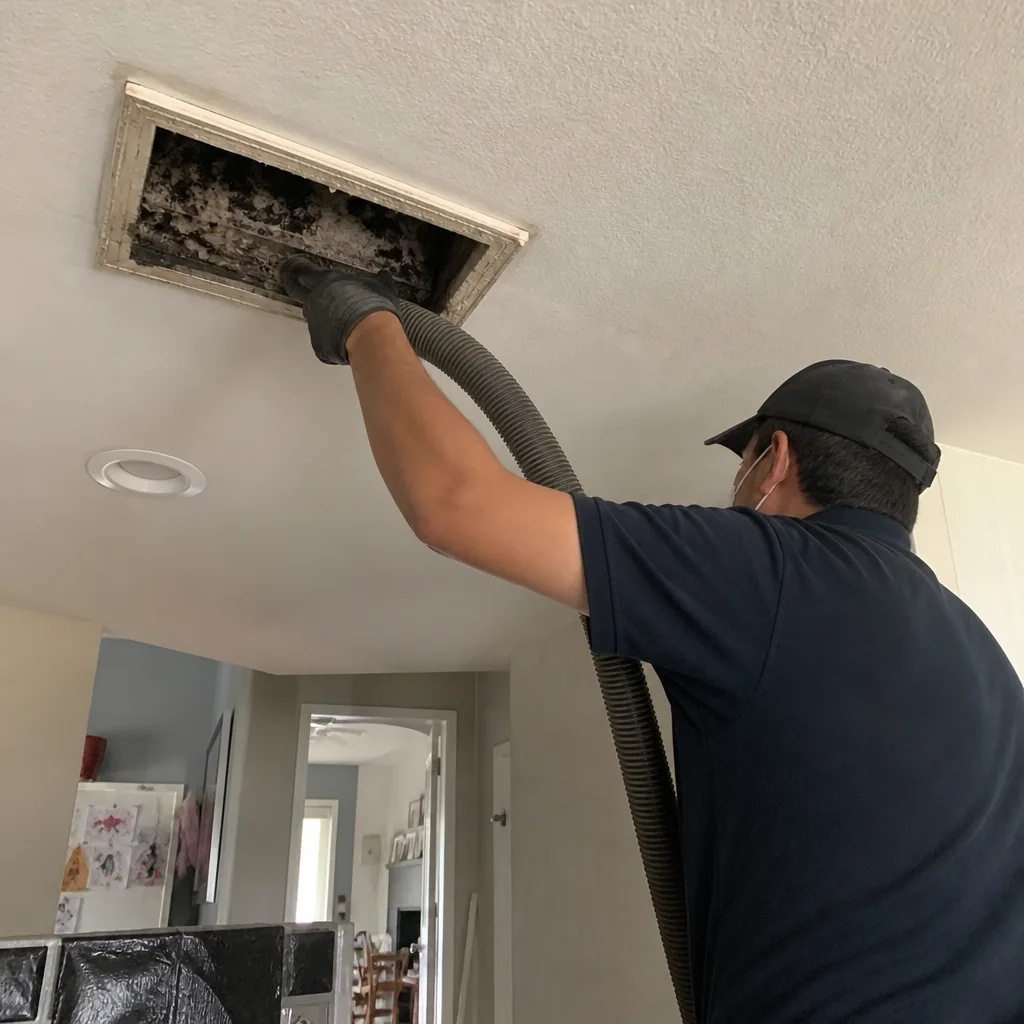 Before
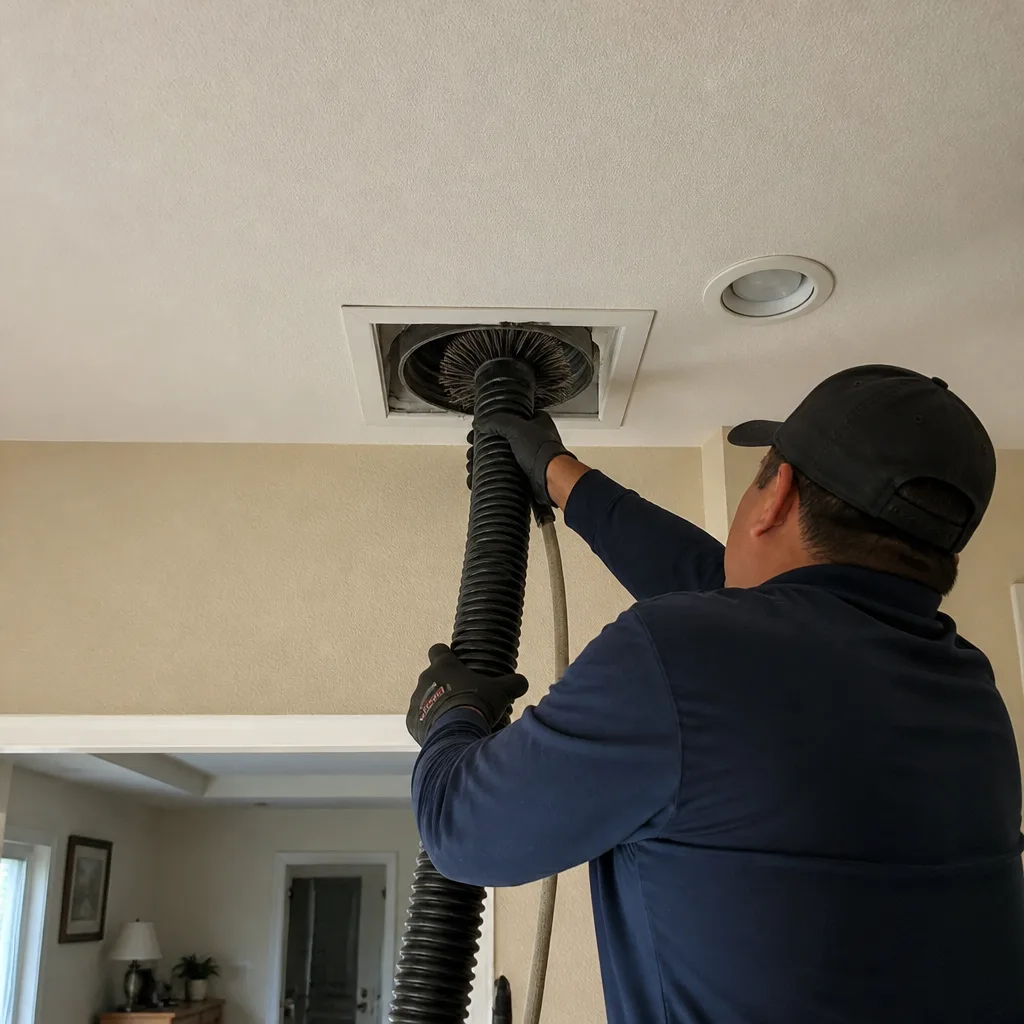 After
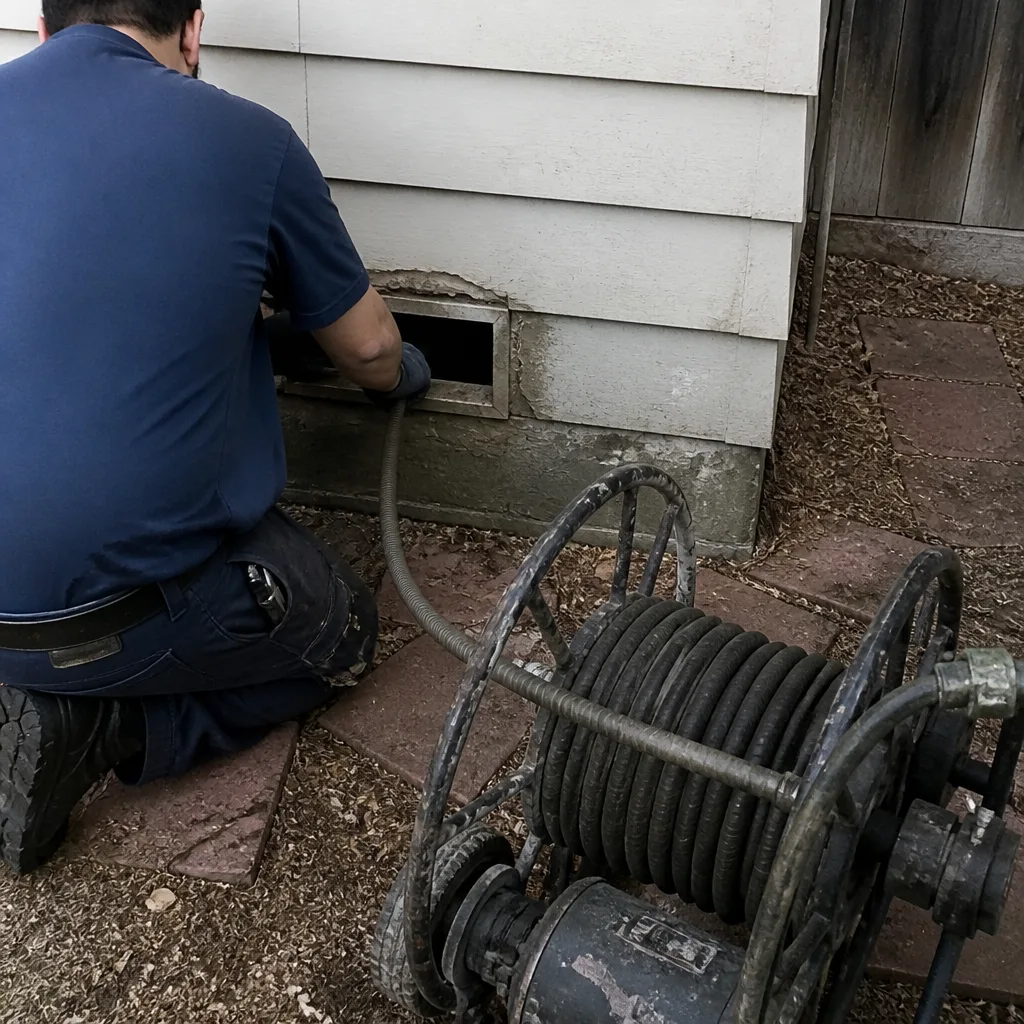 Before
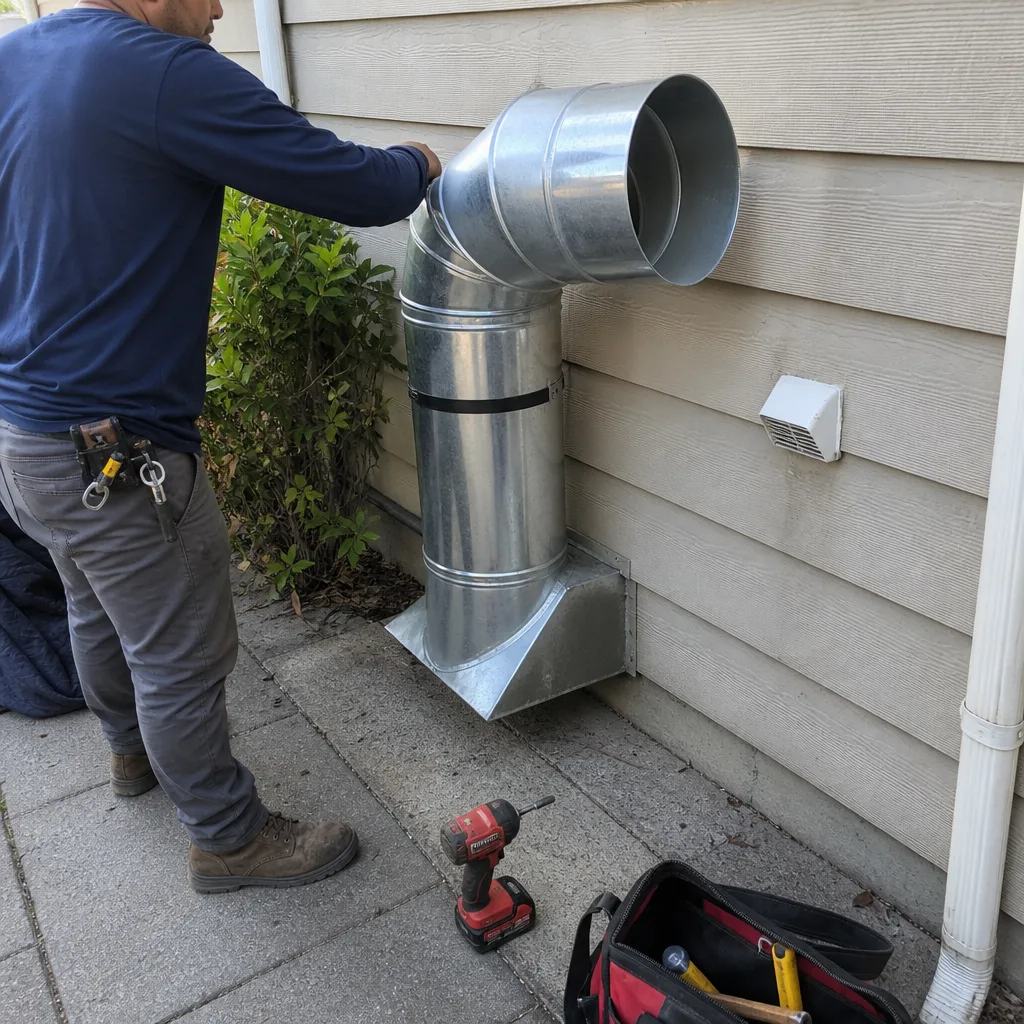 After
 Before
 After