
Rotobrush Air Duct Cleaning in Carmel Valley: A Homeowner’s Guide
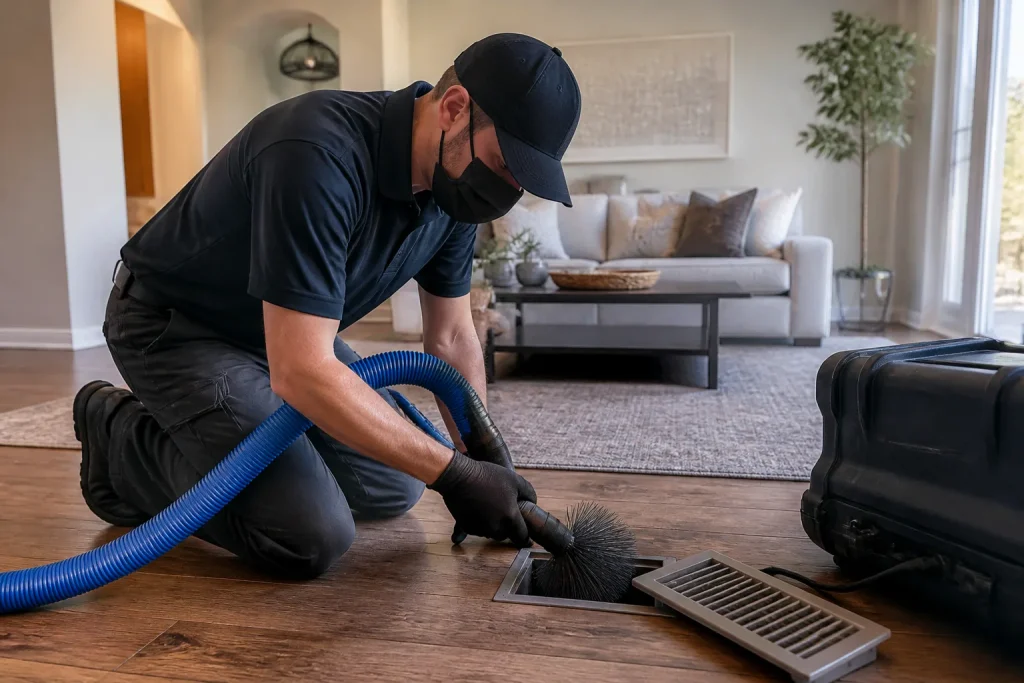
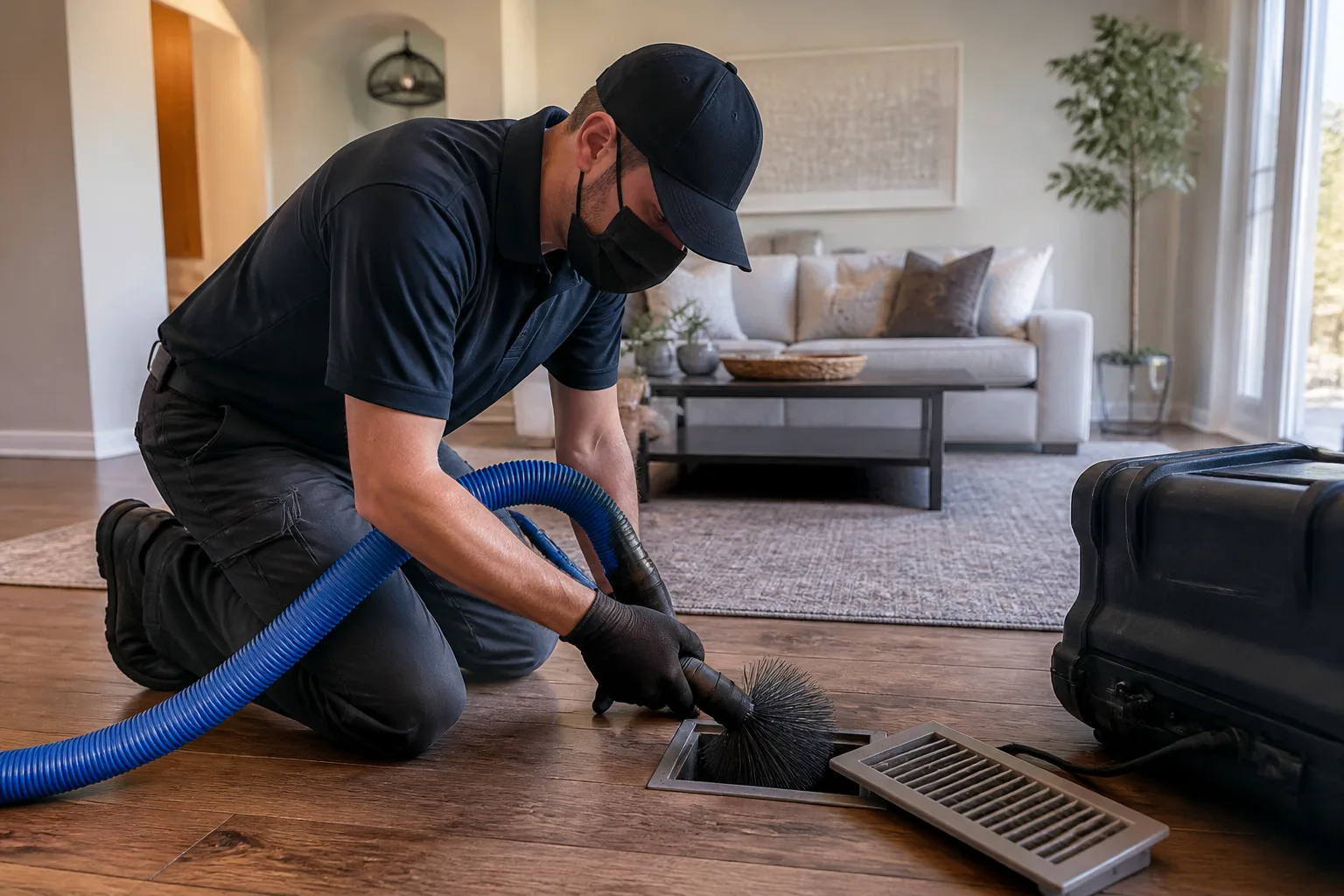
Rotobrush is not one machine. It’s a family of powered duct-cleaning systems built around a rotating brush head that scrubs the duct wall while a HEPA-filtered vacuum pulls the dislodged debris out at the same moment. That combination, brush contact plus simultaneous extraction, is what separates a real mechanical cleaning from the theatrical version. In Carmel Valley, where homes range from 1980s track builds with aging flex duct to newer custom properties with rigid sheet metal runs, that difference shows up fast. If you’d rather skip the research and just get a straight answer about your system, call (855) 338-0352 and we’ll walk you through what a Rotobrush job looks like on your specific duct layout.
What the Rotobrush Actually Does Inside Your Ducts
A rotating brush spinning at 450 RPM while a vacuum pulls air in the same direction is physically different from compressed air blown into a register and hoping debris travels somewhere useful. Compressed air loosens dust but has no way to guarantee capture. It pushes fine particles backward through the system, stirring up what was settled in the trunk line and blowing it toward rooms that might have been clean before the job started. Rotobrush equipment works the other way. The brush head spins against the duct wall, breaking the bond between accumulated dust and the metal or flex surface, and the vacuum moving through the same head captures the debris within inches of where it was dislodged. There’s no travel distance for the dust to escape back into the airstream.
This matters in Carmel Valley homes because the debris profile here is not uniform. Coastal fog cycles through the summer, and the marine layer pushes moisture into crawlspaces and attics. That humidity settles dust that would stay loose in a drier climate. By the time a homeowner sees dust puffing from their registers, what’s inside the ducts is often a compacted layer, not a dusting. A brush that makes mechanical contact with the duct wall is what moves that material. Blowing air at it doesn’t.
Which Carmel Valley Duct Configurations the Rotobrush Handles Well
Carmel Valley’s housing stock includes three distinct duct types, and the Rotobrush BioSpin system is designed to navigate all three. Understanding which one you have tells you how careful the technician needs to be and how long the job should take.
- Flexible duct (flex): Common in homes built from the late 1970s through the 1990s. The inner liner is a thin plastic or foil coil, and it’s easy to tear with improvised tools. The Rotobrush head diameter is sized to run inside flex without catching on the coil seams, provided the technician has inspected the duct first and isn’t forcing the head past a kink or collapsed section.
- Round sheet metal: Used for main trunk runs and some branch lines in higher-end builds. The round brush head cleans the full interior circumference in one pass. Accumulated dust on the bottom of horizontal runs, where gravity deposits most of it, gets scrubbed and extracted in the same motion.
- Rectangular sheet metal: Found in older custom homes and some commercial-adjacent residential properties. The corners are where dust cakes. A rotating brush on a flexible shaft can reach into those corners more effectively than a flat vacuum head, but the technician needs to work the head deliberately through each straight section rather than racing through the run.
None of this is automatic. The equipment matters, but the operator matters more. A Rotobrush in the hands of someone who treats it like a timed chore produces a different result than one run by someone who inspects first, moves at the right pace, and checks the collection filter as the job progresses.
What a Real Rotobrush Cleaning Should Look and Sound Like
If a company tells you they use Rotobrush, you should be able to verify that claim by watching the job happen. Here’s what a legitimate mechanical cleaning looks like from the homeowner’s perspective.
Before anything starts, the technician should run a camera through the system. Not a cursory glance, but a documented inspection showing the duct type, condition, and baseline debris level. In Carmel Valley, where flex duct ages differently depending on whether the home sits in the fog belt or the inland valley slope, that inspection catches problems before a brush goes in.
During the cleaning, you should hear the brush contact the duct wall. It’s not loud, but it’s audible at the register if you’re standing near it. A soft rhythmic scrubbing noise. If the technician hooks up a vacuum and you hear only airflow, no brush contact, you’re not getting a mechanical clean. If you hear nothing at all at the register while someone claims to be working in that line, ask what they’re doing.
At the end of the job, the technician should show you the collection filter or vacuum canister before it’s emptied. What comes out of a Carmel Valley duct that hasn’t been cleaned in five or ten years is normally gray-brown dust, pet hair, construction debris from past remodels, and sometimes a drywall screw or two. We pulled a full section of baseboard trim out of a duct over in the Santa Lucia Preserve area a few years ago, left behind by a finish carpenter who used the register as a garbage chute. A filter full of dark debris is the receipt for the work. An empty filter after a “full cleaning” means the debris either wasn’t there or wasn’t removed.
Why Rotobrush Is the Right Tool After Wildfire Season
Carmel Valley sits downwind of fire country. The Soberanes Fire in 2016, the River and Carmel Fires in 2020, and the ongoing reality of wildfire season in Monterey County mean that ash intrusion is not a hypothetical. Even homes that never faced an evacuation order have had fine ash pulled through their HVAC systems when the outside air turned orange.
Here’s what most homeowners don’t realize: wildfire ash is not like household dust. It’s fine enough to pass through a standard return filter, and once inside the duct system, it behaves differently than the dust and pet hair that normally accumulate. Ash particles are small enough to stay suspended in the duct airstream rather than settling out. Systems that rely on blowing air to move debris around, rather than capturing it at the point of contact, can actually distribute ash deeper into the network and then out through the registers during the next heating season.
The Rotobrush approach matters here because the vacuum is pulling at the brush head the entire time the brush is making contact. Dislodged ash moves inches, not feet, before it’s captured in a HEPA-filtered airstream. That’s the mechanical difference between remediation-grade cleaning and the compressed-air method that’s still common in residential work. If you’ve had smoke intrusion and you’re wondering whether your ducts need attention, our Maple Air Duct home page has more on what a contamination-level cleaning involves.
How to Confirm a Company Actually Uses Rotobrush Equipment
The Rotobrush name carries marketing weight, and some companies use the word while running a generic rotary brush attachment driven by a consumer drill. That’s not the same system. Here’s how to check before you book.
First, ask to see the equipment. A real Rotobrush system is a self-contained portable unit, not a box of attachments. The BioSpin line has an integrated vacuum and filtration system built around the rotating brush assembly. It looks like commercial equipment because it is. If the technician pulls a drill and a brush head out of a canvas bag, that’s not Rotobrush.
Second, ask what happens to the debris. Rotobrush systems filter the extracted air through the unit itself. The debris ends up in a collection canister or filter that you should be able to see. If the answer is vague about where the debris goes, treat that as an incomplete answer.
Third, ask about the inspection process. The equipment and the workflow go together. A company that owns a Rotobrush and knows how to use it will insist on inspecting your ducts before cleaning. That’s not an upsell. It’s how a responsible operator avoids running a brush head into a collapsed flex run or a disconnected joint.
We run Rotobrush and Nikro systems because they’re the same equipment used in commercial and remediation work. When a Carmel Valley homeowner calls us, we’d rather answer questions about how the equipment functions than ask them to trust a brand name. It’s a better conversation, and it leads to a better result. If you’re comparing quotes, the question to ask is not “do you use Rotobrush” but “show me the unit and walk me through the process.” The answer tells you everything you need to know.
When to Call a Pro Instead of Watching Another Hour of Duct Cleaning Videos
Some home maintenance tasks reward the DIY approach. Duct cleaning is not on that list, and the reason is less about skill and more about access and outcome. The duct runs in most Carmel Valley homes are in crawlspaces, attics, or behind finishes. Getting a brush through an entire system without an inspection camera is guesswork. Verifying that the debris was actually removed, not just relocated, requires a collection system that captures and shows you the material. A shop vac with a long hose is not that system.
There’s also the question of what you find once you’re in there. A disconnected flex run sends conditioned air into the crawlspace. A rusted section of sheet metal tells you something about moisture that a cleaning alone won’t fix. We do air duct repair in Carmel Valley as part of the same service because finding a problem and leaving it for someone else helps nobody. If the ducts are already open and inspected, fixing what’s broken is the obvious next step.
Dryer vents are a separate issue with their own urgency. The lint that builds up in a dryer vent is a leading cause of residential house fires, per NFPA data. A dryer vent cleaning in Carmel Valley is not an add-on; it’s a standalone safety service that deserves the same equipment quality as the duct work. If you haven’t had your vent cleaned in the past year and you’re already scheduling duct service, do both.
The Bottom Line
The Rotobrush name matters less than what it represents: mechanical contact plus simultaneous extraction. That’s the standard any legitimate duct cleaning should meet, whether the equipment says Rotobrush, Nikro, or something else professional-grade. What you should not accept is a service that stirs up dust, blows air around, and calls it cleaning. In Carmel Valley, where compacted dust, construction debris, and wildfire ash all accumulate in ways unique to this climate and housing stock, the difference between capture and relocation is the difference between a job done and a job performed.
If you’re in Carmel Valley and want to know what’s actually in your ducts, we’ll inspect them before we quote anything. Air duct cleaning in Carmel Valley with Maple Air Duct includes the camera inspection, the mechanical clean, and a straight answer about what we found. Estimates are free. Call (855) 338-0352 and we’ll schedule a time that works.
Frequently Asked Questions
Whole-home mechanical duct cleaning in Carmel Valley typically runs between $450 and $900, depending on the number of systems, the number of registers, and the accessibility of the ductwork. Homes with a single system and standard access fall toward the lower end. Two-story homes with attic and crawlspace runs, or systems that haven’t been cleaned in a decade, run higher. What should raise your skepticism is a quote under $300 for a full system, which usually means the company is using a shop vac or planning to upsell you once they’re in the door. Call (855) 338-0352 for an exact quote on your Carmel Valley home. Estimates are free.
Every three to five years for most Carmel Valley homes, with a shorter interval after wildfires, major remodels, or if anyone in the household has serious allergies or a respiratory condition. If you’ve never cleaned your ducts and the home is more than ten years old, do it once, see what comes out, and let the visual evidence set your schedule. Homes near the coast where fog cycles through tend to accumulate dust faster because the moisture compacts it. If you’re unsure, we’d rather inspect and tell you your ducts are clean than sell you a job you don’t need. Call (855) 338-0352 for an honest assessment.
The short answer is equipment and scope. A company running a consumer shop vac with a brush attachment pays a few hundred dollars for the tool and can afford to charge $99 per system. The job takes an hour, removes whatever the vacuum can reach from the register opening, and leaves the rest. A professional-grade Rotobrush or Nikro system costs thousands of dollars and comes with a filtration setup that actually captures the debris. That’s the difference you’re paying for. If a quote is dramatically lower, ask what equipment they use and what happens to the debris they remove. The answer usually explains the price. Call (855) 338-0352 for a straight answer on pricing in Carmel Valley.
Three checks. First, you should have seen a camera inspection before the work started that showed what was in the ducts. Second, you should see the collection filter or canister at the end of the job with whatever came out of your system. Third, register covers should be removed during the cleaning, not left in place with a hose snaked through. If all three happen, the work was real. If any one of them didn’t, call the company and ask to walk through the job. A legitimate Carmel Valley duct cleaning company will have visual evidence for everything they did. Call (855) 338-0352 if you’re questioning a past job and want a second opinion.
Written by the team at Maple Air Duct, serving Carmel Valley since 2017.
Need Air Duct Cleaning Help?
Call Maple Air Duct - licensed & insured, with free written estimates in Carmel Valley.
(855) 338-0352